

Constanța Customs is unjustifiably blocking or delaying goods awaiting the issuance of customs declarations and, with this document, the „customs release,” several economic agents and customs brokers have told Info Sud-Est (ISE) and G4Media reporters. Alexandru Mateiciuc, the Deputy General Director of Constanța Customs, is accused by them of preferentially handling situations involving economic agents: „Whoever doesn’t comply waits,” the cited sources stated.
UPDATE 13:00 Finance Minister Alexandru Nazare has „urgently” sent the control body to Constanța Customs after Info Sud-Est and G4Media published an investigation into the blockages and delays affecting private companies, according to a Ministry of Finance press release. Read the full article here.
Neither Alexandru Mateiciuc, the Deputy Director of Constanța Customs, nor representatives of the Romanian Customs Authority have provided a statement in response to inquiries from ISE and G4Media reporters regarding the accusations leveled against the institution and its employees.
Note: „Customs release” represents the moment when goods receive permission to leave customs and proceed to the recipient. After the customs declaration, there is an over-verification called „subsequent control,” where any errors in the initially issued customs declarations can be rectified. After passing the subsequent control, the goods receive „customs release.”

„We filed a complaint with the Constanța Customs Office, with a copy to the Romanian Customs Authority. We received no explanation.”
Documents consulted by reporters showed that one of the economic agents affected by customs officials’ decisions to block operations for various reasons is the company Romstal.
Doru Medianu, the company’s representative, told ISE and G4Media that he informed the Constanța Port Customs Office and the Romanian Customs Authority about the blockage situations the company faced but never received explanations:

- „Yes, I filed a complaint with the Constanța Port Customs Office, with a copy to the RCA (Romanian Customs Authority), regarding a customs declaration that was accepted on May 22 (May 22, 2025, editor’s note) and until the date of the complaint, May 27, 3:40 PM, it had not received customs release. We have not received any explanation from any of the entities involved in our complaint.”
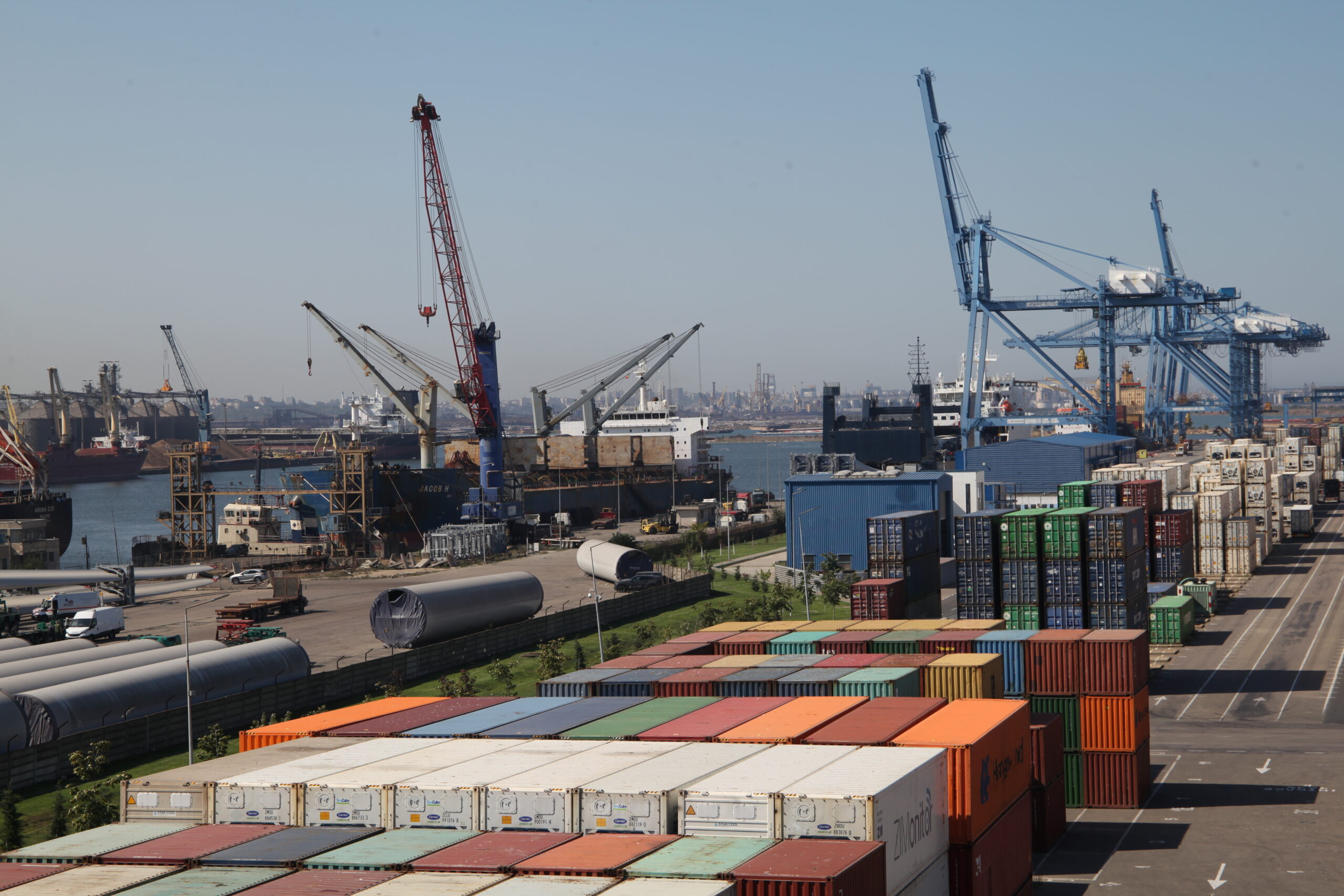
Economic agents are affected by the days of delay in customs declarations because they are forced to pay additional fees, but the logistical delivery chain is also significantly impacted, the Romstal representative further explained:
- „The stationing of containers in the port, due to causes that cannot be attributed to us, generates relatively high costs and blockages in the logistical chain of delivery, reception, and subsequent sale of goods on the market. Blockages of our imports in customs cost us additionally and cumulatively, depending on the blocking period, the number of containers arriving at the same time, weekends, public holidays, etc.:
Storage (calculated from the moment the ship arrives until the full container leaves the port), with the clarification that there is a free storage period, depending on the shipping line, of 5-7 free days, but after its expiration, storage is invoiced from the date of arrival, without taking into account the free storage period;
Container detention (calculated from the date of the ship’s arrival in port until the empty container is returned, with the clarification that the free period for this extra cost is, depending on the shipping line, between 7 and 14 days);
Storage values are at a level of 5-15 USD/container/day and progressively increase with the lengthening of the period until the container leaves the port, full;
Detention values are significantly higher and can vary between 30 and 100 USD/day/container, depending on the container type, 20′ or 40′, after the expiration of the free detention period, and progressively increase with the lengthening of the period until the empty container returns to the port.”
„Customs Officers Are God.” Accusations from Economic Agents and Customs Brokers
The accusations from sources within the Romanian Customs Authority (RCA) are reinforced by the accusations of economic agents and customs brokers with whom reporters spoke during the months-long documentation process.
- Note: Customs brokers are employed by economic agents to handle all the bureaucracy of transactions. They are the intermediaries between state authorities and the owners of goods and prepare all necessary documents for goods arriving in port to be cleared and pass inspection, then to proceed to the final recipient.
Several agents and brokers explained that their operations were unjustifiably delayed, even in situations where no irregularities were found with the transported goods, and that they were told „to meet” with those at the customs office. An „operation” represents the actual process by which goods arriving at customs are inspected by officers in documents, physically, or by scanner, and receive the OK to proceed to the recipient.
Agents and brokers accuse customs office employees of pressure and preferential handling of operations, without explanations from customs officials:
- „They exert very strong pressure there on brokers and economic agents for certain things, and if we comply, fine; if not, they delay our operations. But they only block some, not all; whoever complies gets their operations done and picks up their goods, whoever doesn’t comply waits. A week, two, however long customs officers feel like it, because they are God. And if you complain, they behave abominably.”
The cited sources refer to Alexandru Mateiciuc as „the Lord of the Rings” at Constanța Customs, accusing him of abusively leading the customs office as deputy director, de facto for two decades:
- „He’s a customs chief after a controversial exam and has de facto led Constanța Customs for at least 20 years. The chiefs formally changed on paper, but he’s the Lord of the Rings at Constanța Customs. The former chief, Ioanei Florentina, was firmer and didn’t let him do as he pleased. Otherwise, he’s the Lord of the Rings. They put the current chief there precisely for that reason; she has no customs experience, she’s from Excises (Directorate for Excises and Customs Operations, editor’s note). In 5 months, since they’ve been there, they’ve brought customs to its knees. At Constanța Customs, they have poorly trained professionals, there are many irregularities there, patronized by Mateiciuc, and although these things are known at the center, he has been strongly supported. For documentary control, some people, also appointed by him, who have no experience in documentary control and are extremely poorly professionally prepared, have been put in place,” the ISE and G4Media sources further stated.
Former Suspect in the Murfatlar Case
Elmaz Nezir and Alexandru Mateiciuc were accused by the DNA (National Anticorruption Directorate) in 2016, in the Murfatlar Case, of not fulfilling their duties as customs inspectors and not ordering the suspension of the fiscal warehouse authorization held by SC Murfatlar România SA, even though they knew the company had overdue excises beyond the legal term.
The failure to fulfill duties would have led to a total prejudice of approximately 10 million euros, according to prosecutors’ mentions in the warrant proposal for the preventive arrest of other defendants in the case, cited by Ziua de Constanța. Ultimately, the two were not indicted by the DNA.
G4Media showed in 2023 how part of the Murfatlar Case, with damages calculated at over 47 million euros, resulting from tax evasion, prescribed in prosecutors’ drawers; the „heavyweights” in the case escaped, but damages of over 70 million euros can still be recovered only if the Ministry of Finance initiates a civil lawsuit. Details here.
Blocked Diesel Fuel
From the documents consulted by ISE and G4Media, there are at least two situations where goods, in these cases diesel fuel, are or have been blocked at Constanța Customs for at least half a year.
- „The procedure is as follows: The ship arrives in Constanța Port, and being petroleum products, these are unloaded at Oil Terminal, which thus becomes the customs warehouse keeper. All petroleum products such as diesel are unloaded into an authorized warehouse like Oil Terminal. At Oil Terminal, the customs warehousing operation is carried out, meaning the goods are unloaded from the ship into an authorized area. After that, it moves from customs warehouse to fiscal warehouse, meaning other documents such as DAI (accompanying administrative document for excisable products, editor’s note) are made, and based on them, people pay excises. DAI is the document based on which diesel enters the fiscal warehouse; diesel only moves based on DAI, and when it reaches its destination, excises, customs duties, etc., are paid,” explained RCA specialists consulted by reporters regarding the warehousing procedure.
Then, the cited sources explain, the goods are verified, and a customs declaration is drawn up, and if everything is in order with the goods, the economic agent or customs broker receives the „customs release,” meaning the goods can proceed to the final recipient.
Here arose the reason invoked by Constanța Customs to block the goods of the two companies: According to the law, the name of the warehouse keeper, not the owner of the goods, was entered as the „recipient” in the customs declaration.
Constanța Customs blocked the goods, stating that the owner’s name must be entered as the recipient, according to documents consulted by reporters, although until November, it had issued customs declarations without requiring this:
- „Being a warehouse, after several discussions with the former chief Ioanei Florentina and with our representatives (from RCA, editor’s note), it was agreed that the warehouse keeper’s name, not the owner’s name, would appear as the recipient. The law also states this. And the name of the owner of the goods appears anyway in the description of the goods. And even if, let’s say absurdly, the customs declarations were wrong, if they contain errors, they can be rectified during subsequent control. Anyway, they shouldn’t have blocked them. It’s the ugliest and most blatant form of abuse because there is no legal justification,” RCA sources stated.
What does the law say? According to Law 227/2015 on the Fiscal Code, Article 341, paragraph 1, point a): „The person liable to pay excises that have become due is the authorized warehouse keeper, the registered consignee, or any other person who releases the excisable products from the excise duty suspension arrangement or on whose behalf such release is carried out and, in the event of irregular exit from the fiscal warehouse, any other person who participated in such exit.”
- „However, Mr. Mateiciuc stopped the operations because he said that the owner’s name, not the warehouse keeper’s, should appear as the recipient, because that’s what he wants. But the law clearly states that the warehouse keeper’s name must be entered, not the owner’s,” further explained ISE and G4Media sources from the Romanian Customs Authority.
Finance Minister: Body Cameras for Customs Officers
The Constanța Customs Office is part of the Romanian Customs Authority, an institution led by Marcel Mutescu since January 2024, which is subordinate to ANAF (National Agency for Fiscal Administration) and, respectively, the Ministry of Finance.
During parliamentary committee hearings on Monday, the new Finance Minister, Alexandru Nazare, launched a harsh attack on ANAF. Nazare, who also served as Finance Minister in the Cîțu Government, stated that „ANAF is dysfunctional by its institutional architecture” and that he does not want, no matter how difficult Romania’s financial situation is, for ANAF „to start a hunt for controls,” especially targeting small and medium-sized businesses „where it plays the tough role,” while being „gentle” with large ones: He also said that these roles should be reversed.
Alexandru Nazare also stated that a technical restructuring of ANAF is needed and that the institution has no targets or a generalized control plan.
Regarding customs officers, Nazare stated during the hearings that the government program stipulates that customs inspectors and anti-fraud inspectors will wear body cameras to constantly monitor their activity. The measure also appears in the government program of the Bolojan government.
Lucian Heiuș, former head of ANAF, stated in an intervention on Digi24 at the beginning of June that the SRI (Romanian Intelligence Service) should be involved in combating corruption and tax evasion at Constanța Customs:
„It would be much more appropriate for the SRI to help combat the corruption that exists in high-risk areas. We are talking about Constanța Port, where everyone recognizes that it is the main place where goods enter Romania without documents or at low prices, which are then sold on the Romanian market. Measures indeed need to be taken there, and perhaps the expertise of specialists from this service will help us (…). I suspect that (tax evasion in Constanța Port, editor’s note) is very large. There is a customs problem there because it is the main entry point for products into Romania. If we talk about the famous Red Dragon – because we were talking about ANAF – where goods are traded without documents or at low prices, I have always wondered how these products can reach the market. Because if they were registered somewhere, taxed, they could no longer be traded without documents,” said Lucian Heiuș, former head of ANAF.
Ne bucurăm că ne citești!
Dacă vrei să ne și susții: