

The President of Romania, Nicușor Dan, was asked on Wednesday, in regards to the country’s Defense Strategy, whether he takes into account the possibility of espionage from China, in the context of the thousands of Chinese surveillance cameras installed in Dobrogea, purchased with European funds, about which Info Sud-Est reported exclusively.
“Of course, this strategy is a somewhat generic document. When it talks about espionage, it refers to anyone who might spy on us; I don’t think we should single out this issue. Even if the word ‘China’ doesn’t appear very often in the strategy, it still comes through when we talk about critical resource chains, there’s a big dot there: China. In short: On the one hand, any kind of security threats must be handled by the responsible institutions. On the other hand, China is an important global actor, especially in the economic sphere, and Romania’s interactions must take into account its national interest, we cannot abruptly cut off relations with China. We need to maintain a balance: to see who our security partners are, but also remain engaged economically.”
Context
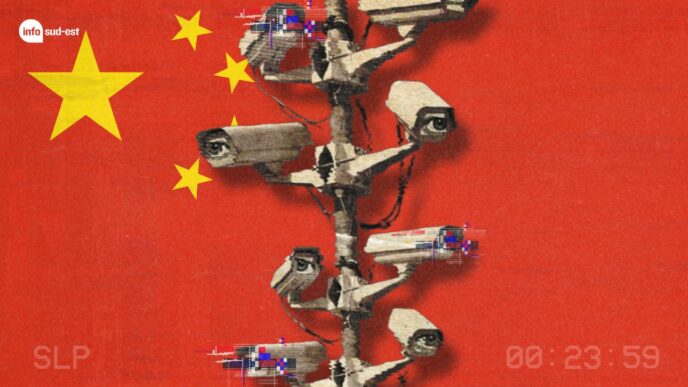
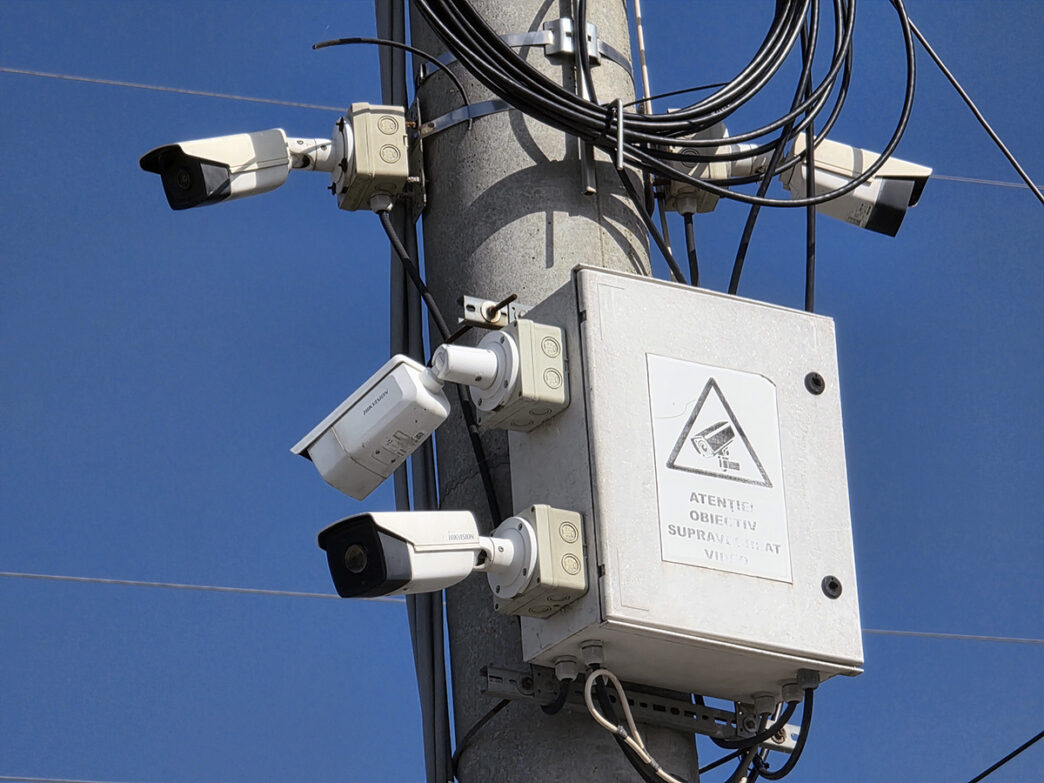
Info Sud-Est investigated how thousands of video surveillance devices imported from China have spread across Dobrogea, a region neighboring Ukraine and forming part of NATO’s and the European Union’s border.
The video cameras were purchased either with funds from the state budget or with European money through the National Recovery and Resilience Plan (PNRR), from companies that are on the blacklist of the United States, Canada, or the United Kingdom.

In two of the three companies identified by Info Sud-Est — Dahua and Hikvision — the Chinese state is a shareholder. In the third, Milesight, it is not, but this company is also subject to the National Intelligence Law of the People’s Republic of China, adopted in 2017.
According to this law, “any organization or citizen shall support, assist, and cooperate with national intelligence work, and shall keep secret any national intelligence work they are aware of.”

In other words, China can obtain any kind of information captured by the video surveillance equipment covering Dobrogea — whether it involves:
- The road connecting Constanța to Bulgaria, and further to Istanbul, along which military equipment passes;
- The commune of Mihail Kogălniceanu, where the future “American town” is being built and where the 57th Air Base is located;
- Or the road crossing Tulcea County, used for the transport of aid to Ukraine or grain shipments coming from the country invaded by Russia.
In fact, a joint report from Western intelligence services, including those of the United States, the United Kingdom, France, Germany, and the Baltic states — revealed in May that 1,000 video cameras in Romania, located near military units and railway crossings, had been targeted by Russian spies. Romania’s intelligence services did not participate in this report.
Nevertheless, Romania continued importing thousands of such video cameras and installing them even in almost deserted villages. In total, nearly 400 million euros were allocated by the Romanian state, through the National Recovery and Resilience Plan (PNRR) alone, for “smart local management systems.”
The technical specifications prepared by town halls in Dobrogea were often copy-pasted and included, for example, requirements for traffic control or traffic lights in villages where reporters counted only two cars in three hours in the middle of a workday.
In most cases documented on the ground by Info Sud-Est reporters over several months, the video equipment was produced by three Chinese companies: Milesight, Hikvision, and Dahua — the latter two being at the center of multiple security scandals and ethical controversies, such as the illegal monitoring of Uyghurs, the Turkic minority that China’s communist government has sought to eradicate.
Bogdan Dragomir, the representative of the company that installed the largest number of Chinese surveillance devices in Dobrogea, purchased with European funds, claims that mayors request such cameras because they are cheap and numerous.
Dragomir admits that Romania’s Intelligence Service (SRI) and the General Inspectorate of the Romanian Police (IGPR) recommend Axis (Swedish) or Bosch (German) cameras. However, neither the applicant’s guide prepared by the Ministry of Development, the institution through which the European funds were provided, nor the technical specifications written by local authorities with the help of consultancy firms prohibit the use of Chinese equipment: „So I sell what I’m asked for”.
“As long as a system isn’t exposed on the internet and can only be accessed via VPN, it doesn’t represent a breach, and there’s no way a state actor like China could access those surveillance cameras,” Dragomir claims. He also states that:
“Mayors want to have access on their phones, but we don’t give it to them,” said the representative of the company that has installed over two thousand such Chinese-made video devices in Dobrogea alone.
- Citește ancheta ISE integral aici.
Ne bucurăm că ne citești!
Dacă vrei să ne și susții: