


In any Eastern European language you pronounce it in, the name Adam Michnik has the same meaning: freedom.
Adam Michnik spent six years in prison, over several sentences between 1965 and 1986. He served as a deputy in Poland’s first post-communist Parliament (1989–1991), was a member of the Round Table team that ensured the country’s transition from totalitarianism to democracy, and in 1989 he founded Poland’s most important and influential newspaper, Gazeta Wyborcza, often described as the “New York Times of Eastern Europe.” For decades, Gazeta Wyborcza printed 500,000 copies daily, employed more than 500 journalists, was listed on the Warsaw and London stock exchanges, and became an unmissable landmark of Poland’s public sphere.
There exists a symbolic army of people, the dissidents, in the countries once occupied by communism until 1989. They fought for a society free from oppression, a world where one could choose and be chosen. These people carry, across generations, the burden of a historical memory that few regions outside Eastern Europe could understand. From the very beginning, dissidents opposed Good to Evil, democracy to totalitarianism, civilization to darkness, Eastern Europe to Russia. Their solutions may not always have stood the test of time, but their courage, moral clarity, and the hope they offered to societies traumatized by successive and oppressive dictatorships remain admirable. One of the tireless soldiers of this symbolic army, fighting for freedom, balance, and normality, is the journalist, historian, public intellectual, and civic activist Adam Michnik.
“Freedom means responsibility,” says Adam Michnik.

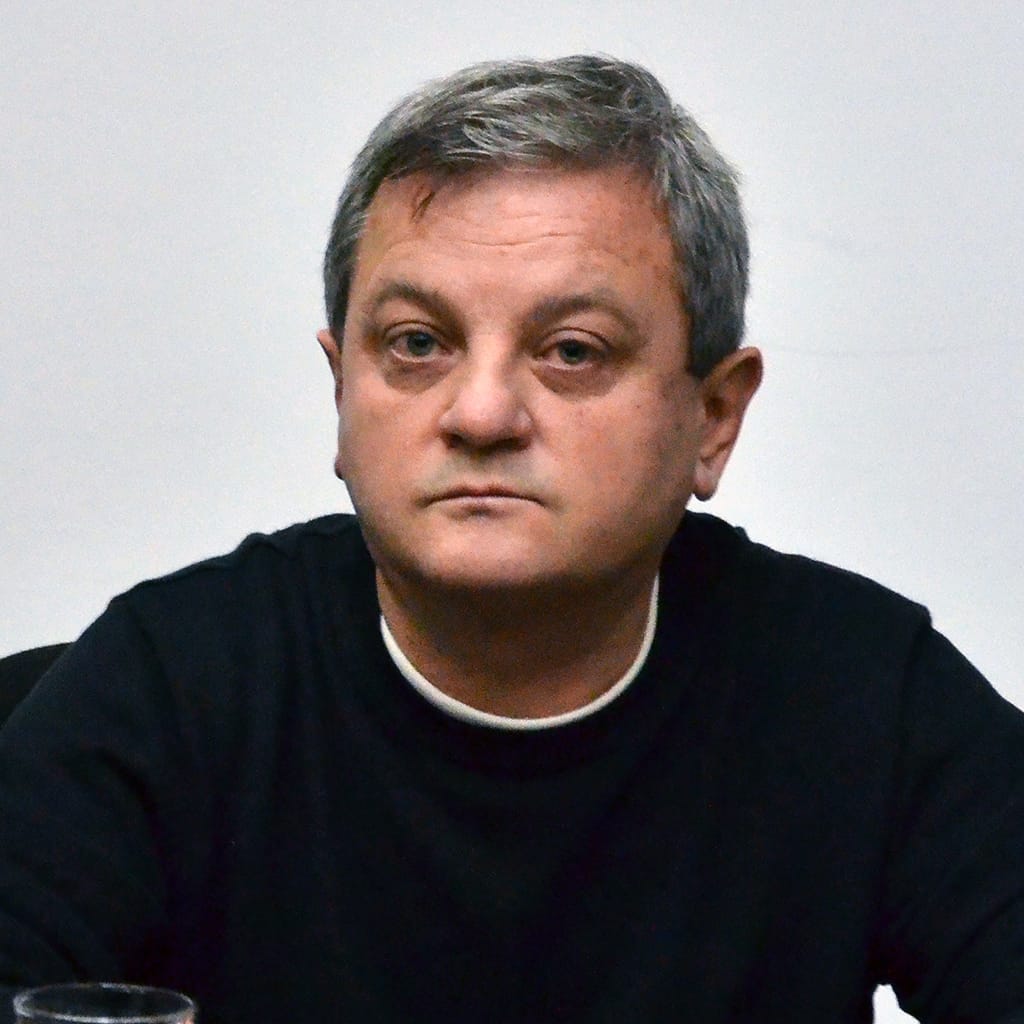
(Photo source: Personal archive)
He warns that there are entire segments of society that find it easier to live as servants. This explains, for instance, why in Russia many people still admire Putin and regret Stalin, why there are Germans who admire Hitler, and why some Romanians think back fondly about Ceaușescu. “When you think things about the past are perfectly clear,” Michnik says, “it means you have not understood them, especially if you judge what happened only in black and white.”
Born into a family of communist activists before World War II (1939), Michnik entered the University of Warsaw’s Faculty of History in 1964. He only completed his studies in 1975 at Adam Mickiewicz University in Poznań, under Professor Lech Trzeciakowski, with historian Jerzy Topolski also on the evaluation committee.

He was a problem student: suspended and expelled several times, arrested and imprisoned for “acts of hooliganism.” After his first year in college, he was suspended for circulating an open letter among his classmates addressed to members of the ruling Polish United Workers’ Party. In 1966, he was suspended again for “subversive activities” and began working as a journalist for magazines such as „Życie Gospodarcze„, „Więź„, and „Literatura”. Finally, in 1968, he was expelled altogether, becoming the pretext for one of the most infamous antisemitic campaigns launched by Poland’s communist regime.
As Mihail Sebastian is the one who, in 1930s Romania, wrote „How I Became a Hooligan„, Adam Michnik is the one who lived that status firsthand when, in the spring of 1968, he sparked protests against the censorship of a play by Poland’s national poet, Adam Mickiewicz, banned for its anti-Russian allusions. “To outlaw a text by Adam Mickiewicz,” he explained, “is like banning Shakespeare in Britain or canceling Victor Hugo, Balzac, or Stendhal in France.”
This time, the student Michnik had no escape: he was sentenced to three years in prison. One interrogation exchange, made public after 1989, captures his courage at the mere age of 22:
Secret Police Officer (SB): “Michnik, when you get out, wouldn’t it be better for you to go live in Israel?”
Michnik: “Why should I?”
SB Officer: “Because you’re a Jew, and all Jews should get lost to Israel.”
Michnik: “I’ll leave the day after you go to Moscow.”
Released on parole in 1969, Michnik was banned from resuming his history studies, which he only got to finish in 1975.
By the late 1970s, he began the long and difficult project of dismantling the communist totalitarian regime. Joining the Workers’ Defense Committee (KOR), he edited and wrote for underground publications such as „Biuletyn Informacyjny”, „Zapis”, and „Krytyka”. In 1980, he joined the decision-making structures of the Solidarity movement, the most important anti-communist force in Europe.
In December 1981, after General Wojciech Jaruzelski declared martial law, Michnik was arrested again. Despite the regime’s efforts, neither Solidarity nor the Polish Catholic Church was crushed. Romania’s Nicolae Ceaușescu even offered military assistance to Jaruzelski to help “save” the dictatorship. Michnik remained imprisoned until 1984 without trial. In 1983, from prison, he wrote to Interior Minister Czesław Kiszczak, saying the general had “a soul as generous as the Russian steppe,” adding: “You are a vindictive pig without honor.”
Released briefly, he was arrested again in 1985 and sentenced to three years. His political philosophy of the relationship between a political prisoner, an oppressive regime, and the dream of a free country took shape during this time in his internationally acclaimed collection „Letters from Prison„. “When a man is in prison, even in a country that itself feels like a prison, as many did under communism, he must build for himself all kinds of scenarios of hope,” he said later on.
After his release, Michnik became an adviser to Lech Wałęsa, leader of Solidarity, and founded „Gazeta Wyborcza” in 1989. That same year, he won a seat in Poland’s first partially free parliamentary elections (June 4, 1989). The first exhausting step toward democracy was defined in his historic July 3, 1989 editorial, “Your President, Our Prime Minister.” It called for a political truce: communists would keep the presidency under Jaruzelski, while the opposition would form the government, a model later echoed in Hungary and Czechoslovakia.
Michnik was part of the Round Table negotiations between the communist authorities and the opposition that mapped out Poland’s democratic transition. He argued for a historic compromise between reformist communists and Solidarity, rejecting vengeance and seeking a Poland not divided between almighty victors and oppressed losers. The principle “Amnesty, yes; amnesia, no” summed up his vision: forgive, but never forget. This helped shape Poland’s successful, peaceful transition, implemented by Prime Minister Tadeusz Mazowiecki (1989–1991). Thanks to such principles, Poland stands today as the world’s 20th largest economy and a respected European power.
Though close to Wałęsa and Mazowiecki, Michnik soon withdrew from active politics.
Why?
Because, he explained, every revolution has two stages: the easy one – fighting for freedom – and the hard one – fighting for power. In the first, the good triumph and ideals inspire people; in the second, envy, suspicion, and revenge emerge. He wanted to avoid revolutions like those of France (1789) or Russia (1917), which were against something or someone. A true revolution, he said, should resemble the American Revolution: building institutions, transparency, constitutionalism, and liberty. “Revolutions should not promise paradise,” he warned, “because every utopia ends the same way with the guillotine and the gulag.”
His split from President Wałęsa (1990–1995) reflected this conviction. Michnik criticized Wałęsa’s “thirst for power” and “charismatic authoritarianism,” saying he behaved like an emperor representing all of Poland by himself.
Parting ways with legends is part of Michnik’s philosophy: “Democracy doesn’t need heroes, it needs citizens.” Democracy, he says, tolerates even those who want to destroy it. Its greatest threat is not violence, but political attacks on the Constitution and the freedoms it guarantees.
A return to the past, he warns, is always possible, aided by manipulated collective memory. Communism promised a world without conflict, but, Michnik notes, such a peaceful world exists only in a cemetery. Where living people exist, conflict will too. What matters is that conflicts remain civilized and constitutional.
“There are no final victories,” he reminds us, “and no final defeats.”
Even the triumph over communism, he says, is not absolute. The fall of one Evil gave rise to two new dangers: nationalism and Russia. Ethnic nationalism, he writes, is nothing but “the highest stage of communism” – the natural ideology of authoritarian regimes. Where democracy falters, as in Viktor Orbán’s Hungary, nationalism becomes state policy, rallying a nation against supposed external enemies under the supreme leader’s rule.
Russia, meanwhile, remains a permanent presence in Polish and Eastern European history, as well as in Michnik’s writing. On the first day of Russia’s invasion of Ukraine, he published an editorial titled “Now We Have All Become Ukrainians” in Gazeta Wyborcza, warning that “the world we entered in 1989 has ended” and that Ukraine is fighting not only for its own freedom but for ours, too. In another editorial, on February 28, 2022, he wrote: “This is a war between Putin’s criminal imperial autocracy and Ukrainian democracy.”
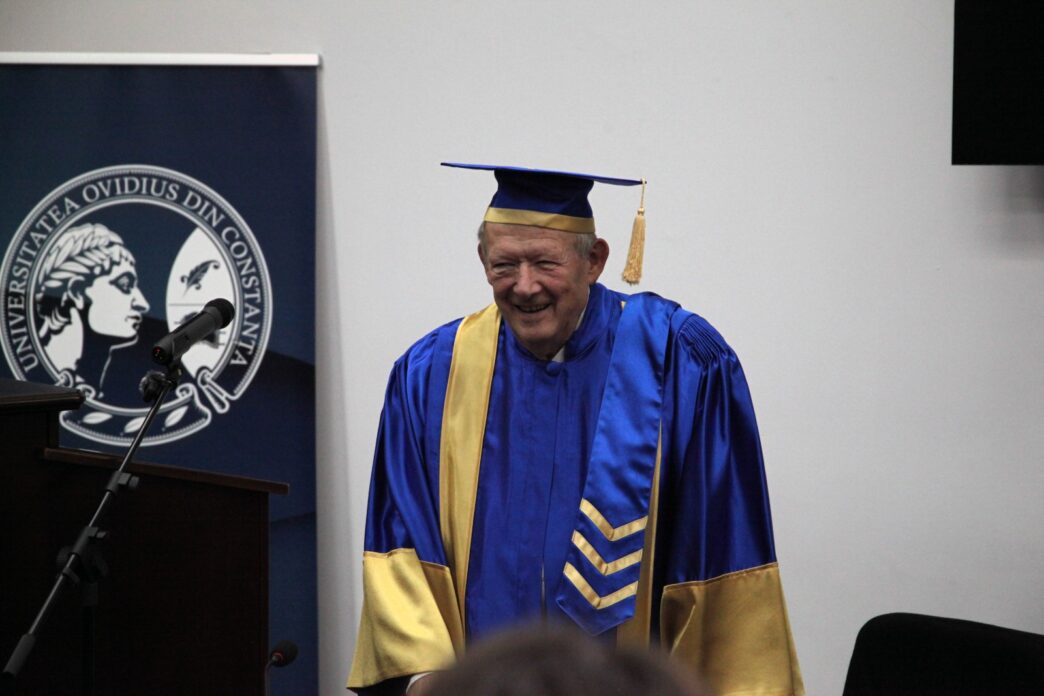
The idea of uncompromising freedom and the practice of memory as a form of justice have been the defining themes of Adam Michnik’s more than half-century of work in the service of Good. Over time, he has become a uniquely respected voice, honored with countless awards, distinctions, and recognitions.
Ne bucurăm că ne citești!
Dacă vrei să ne și susții: