

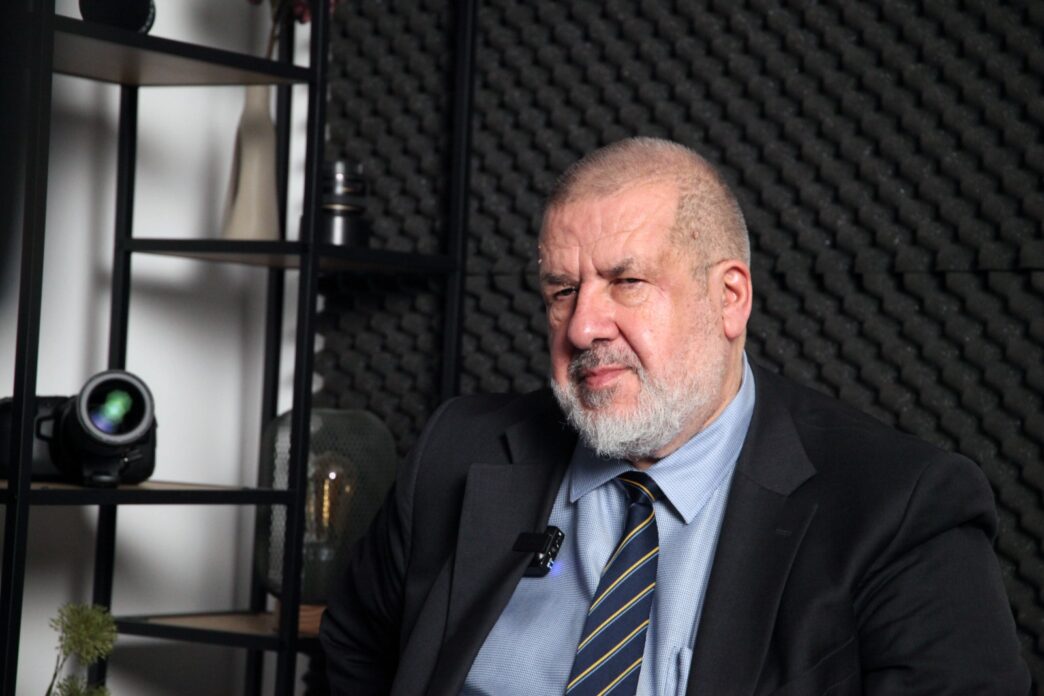
Refat Chubarov is the leader of the Crimean Tatars and one of the strongest opposition voices on the peninsula illegally annexed by Russia in 2014. It is populated massively by Russians and, in minority, by Tatars. Why are they a minority? Because the Russians have been killing and driving them out for centuries. Since Catherine the Great.
For those who don’t know what the Crimean Peninsula means, the history lesson is very simple: It always belonged to the Tatars, but then the Russians appeared. In 2014 came the most aggressive and well-known recent episode, but it had been taken over and ethnically ravaged by the Russians starting in 1783, when it was illegally annexed by the Russian Empire; then the Tatars were, in 1944, illegally expelled from the peninsula.
Even though some returned after 1990, the Tatars never recovered as a people. After 2014, the arrests and banishment against them is exactly what a Putinist Russian hopes for. Several states, including Canada and the Netherlands, consider this racial extermination to be genocide.
Interview conducted by Andreea Pavel, on December 12, 2025
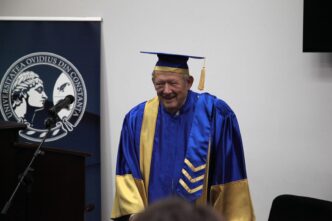
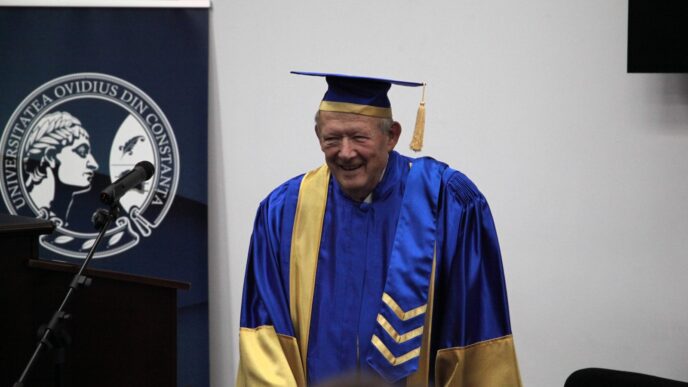
Translation provided by Metin Omer, historian, scientific researcher, Ovidius University of Constanța

Reporter: What does life look like for the Crimean Tatars who remained on the peninsula after 2014?
R.C.: The reason why the Russian invaders occupied Crimea, our native land, is to transform it into a military base on the Black Sea. For this reason, everyone who lives there and does not accept the occupation is seen as an enemy and is subjected to pressure.
Soon it will be 12 years since the annexation. Russia’s goal is, on the one hand, to make the Crimean Tatars leave the peninsula; on the other hand, to settle Russians there – one million Russian citizens have been brought to the peninsula after the annexation.
They are currently russifying the peninsula: there is not even a single school left in the Ukrainian language. There were 14 schools in the Crimean Tatar language, but they turned them all into schools teaching in Russian.
There were 14 schools before the annexation. The schools remain, but now they are in Russian.
Here I must explain that for 45 years, after the deportation, Crimean Tatars lived in exile during the Soviet period. For 50 years we had no schools. After we returned to our native territory, we began opening schools with great difficulty. Fourteen schools are few, but we had to start everything from scratch—prepare the curriculum, teachers, etc. It was a difficult process, and just when things had started to move and we were revitalizing our mother tongue, they annexed the peninsula. The Russians came and destroyed everything.
I must also say that the Russian invaders, Moscow, know very well the feelings of the Crimean Tatars. Our people know their own history very well, and our memory is very strong.
All the hardships we have lived through for more than 200 years have been connected to Russia. When the Russian Empire annexed Crimea in 1783, the population was entirely Crimean Tatar. We had had the Crimean Khanate for 342 years, a very important state.
In the 19th century, the Russians russified Crimea, which they had annexed. Russia’s goal was to “cleanse” the peninsula, to russify everything.
I will mention two historical moments.
The first is connected also to Romania, to the people of these lands, these places:
1853–1856, the Crimean War: There was a coalition—the Ottoman Empire, France, England, Sardinia—against the Russian Empire. At that moment the Crimean Tatars had great hope that the coalition would win and the peninsula would be liberated. The coalition did win, and important agreements existed, and according to the Paris Peace Treaty, Crimea remained under Russian control. What did the Russians do? In four years they expelled at least 200,000 people.
The great-grandparents of today’s Crimean Tatars were forced to leave Crimea then.
In 1944 it was no longer the Russian Empire, it was the USSR. In 1944, Stalin deported the entire population to various places in Central Asia, to remote areas of the Soviet Union. In three days, over 240,000 people—women, elderly, children—were put into cattle cars and sent into exile in Central Asia.
Then, because of disease, hardship, hunger, half the population died. For 45 years our people did not sit idle; our national movement initiated efforts for the return to the homelandland.
Communist regimes fell not only in the Soviet Union but also in other countries controlled by it, Romania, Germany, in the 1980s. When our people returned to Crimea, it was already part of independent Ukraine.
This process of return and resettlement in Crimea lasted 23 years. Throughout this period we supported democratic forces in Ukraine, for Ukraine to be part of the EU, to be a country with democratic standards. What I would like to point out is that It seemed we truly had a chance to rebuild as a nation in Ukraine, and those chances existed.
But in 2014, Moscow came again; the Russian army entered Crimea again. Moscow knew very well, and the Russians knew very well, that Crimean Tatars did not want the Russians to be present there.
But I must also say that when the Russian army entered Crimea, no one except the Crimean Tatars went out to protest in squares, on the streets. From Crimea’s population of 2.35 million, we were 300,000, not very many. For example, there were 500,000 ethnic Ukrainians on the peninsula; the majority were ethnic Russians.
Only the Crimean Tatars went out to protest, because we were the ones who knew very well what the Russian administration could do. But what can 300,000 people do? Still, the whole world saw that Crimean Tatars are ready to defend their native places.
As a result, Ukraine’s view of the Crimean Tatars changed positively, because we made efforts to defend Ukraine’s territorial integrity.
The Russians once again saw how much the Crimean Tatars do not love them. First they banned the National Mejlis of the Crimean Tatars and began pressure on its members. On July 5, 2014, they forcibly removed me from Crimea; then the trial began. They gave me for six years.
Two of my colleagues were imprisoned. Akhtem Chiygoz was sentenced to 8 years in prison. After 3 years, with the help of Turkey’s president, Akhtem Chiygoz was released; he came to Kyiv; he is now a member of the Verkhovna Rada in Kyiv.
My other colleague, Nariman Dzhelal, was arrested in 2021 and sentenced to 17 years, labeled a terrorist, an extremist. What was he actually doing? He did not accept the Russian occupation, because he considered Crimea part of Ukraine, the land of the Crimean Tatars. We managed to free him after 3 years with the help of international organizations and President Erdoğan. Nariman Dzhelal is now Ukraine’s ambassador to Turkey.
I mentioned two people, but at this moment 325 of our people are imprisoned in various ways, of various ethnicities from the peninsula, 170 of them Crimean Tatars. About 56% of those imprisoned. I mention this because our share of the population is 12% in Crimea, but among political prisoners the majority are Crimean Tatar. The reason is that Moscow sees Crimean Tatars as enemies and wants to make them leave Crimea.
But why do many try to leave Crimea?
Firstly, Crimean Tatars do everything possible to remain in their native territory, to stay there.
Our people who remain there strongly criticize those who leave. There is even a slogan: “Live in Crimea.” Our people say invaders come and go, but you live in Crimea.
Our people know how hard it is to return from exile; dozens of descendants of those deported still live in Siberia, Uzbekistan. And the Russians understand this very well and drive us out of Crimea by force. Our people made efforts to remain in Crimea, but in 2022 the war broke out.
And in September 2022, the Russians announced mobilization. We saw then that Crimean Tatar men are first to be put on the front line.
They used Tatars as disposable mass, but it was also a method to get rid of them. Cannon fodder, and also a way to get rid of them.
For example, in one village they issued mobilization orders for 100 people; Crimean Tatars were not the majority there, but out of 100 they took 80 Crimean Tatars.
The National Mejlis of the Crimean Tatars issued a statement saying they did not accept the mobilization, that it is not normal to fight against their brothers, that they should do anything to escape mobilization. People knew very well what they had to do even without this statement. Thousands of young people then left the peninsula to avoid mobilization.
Rep.: How do you see the future of the peninsula if it is liberated and, conversely, if it is recognized as Russian, in the context of the war?
R.C.: The history of the Crimean Tatars shows that if the peninsula remains under Russia, Crimean Tatars have no future.
Then Putin will fulfill what Catherine began and Stalin continued: Crimean Tatars will be eliminated from their native land.
I have told you more from the Crimean Tatar perspective, but we should also look at a broader perspective: as I said, he has turned Crimea into a very powerful military base.
In the Soviet period, on the territory of Crimea—a small territory, 28,000 square kilometers, there were 18 airports. The Russians repaired all of them. There are 250 garrisons in Crimea, missiles, drones, all sorts of systems. Crimea is now a huge military garrison.
It is clear that Russia is doing this so it can continue its expansion, threaten the Black Sea region, the Mediterranean Sea, countries it considers enemies, NATO member states.
It uses Crimea to control the Black Sea and the Mediterranean Sea; it wants to use the peninsula against Romania, Georgia, Turkey.
To obtain peace, some say Ukraine should cede territories and thus peace will be achieved.
That is a huge lie: ceding these territories will not end the war. Your question is very appropriate: during this period people discuss a lot about the future of territories occupied by Russia. And it greatly upsets us, the position of the US president. He says: “You no longer have the power to liberate Crimea; give it up.”
Unfortunately, this politician does not understand that the peninsula is not just a piece of land on a map. In fact, when he says that, he is saying that Crimean Tatars should disappear. Politicians who say the peninsula must be ceded do not understand that they are, in fact, saying that the war must continue.
Rep.: Can Ukraine win the war without US help?
R.C.: It’s a difficult question. I am not a military specialist, but I understand that in European communities there are not enough resources, enough weapons to continue the war. From European countries, material and financial support could be sufficient, but not military support.
Rep.: Are Crimean Tatars involved in the war somehow? Are you a voice in negotiations?
R.C.: Where decisions are made, our voice has not been heard yet. The position of the National Mejlis of the Crimean Tatars and of Crimean Tatars is that the future can be decided only by two parties: Ukraine, because the peninsula is part of Ukraine, and Crimean Tatars, because the homeland of Crimean Tatars is Crimea—there they were born, lived for hundreds of years, had a state; their whole life is there.
Rep.: What do you expect from Kyiv regarding the situation of Crimean Tatars when the peninsula is liberated? What status should Crimean Tatars have? What is the best solution for Tatars from your point of view?
R.C.: The best formula is Crimea with a special status within Ukraine: an autonomous region in Crimea, with Crimean Tatar rights respected. Thus we see Crimea as a Crimean Tatar autonomy—because the population there arrived after we were deported. It cannot be an autonomy of those who came later.
All peoples have a “mother state,” but Crimean Tatars do not. I want to say something about the Tatar voice:
Yesterday I had several discussions in Bucharest. One meeting was with Romania’s foreign minister. In this meeting I raised this issue, as we do in other meetings in other countries.
Romania has a good position in the EU. Romanian politicians are in contact with Ukraine regarding peace talks and their voice is listened to. We asked the minister that whenever she participates in a discussion about the future of Crimea, whoever says whatever, she should ask what the future of Crimean Tatars will be.
At this moment people discuss on the basis of three documents regarding the war. One of them mentions security guarantees for Ukraine. This is very important: if peace was to be signed now, these guarantees are needed to prevent a future war, but the Crimean Tatars also need guarantees.
Trump says we could recognize Crimea de facto. Fine, you can recognize it de facto, but if it remains under Russia’s control, what will the situation of the Crimean Tatars be? That is why our great request to all democratic countries, to all leaders, politicians, parliaments, is: when they speak about Crimea, they should speak about the future of the Crimean Tatars.
We have lived through such hardships many times in our history. I mentioned the Crimean War, but I can also recall Yalta in February 1945, when three men decided the future of the entire world: Roosevelt, Churchill, Stalin.
Rep.: How do you assess the relationship between Russian dictator Vladimir Putin and President Donald Trump, in relation to the fate and future of Ukraine? Why is Ukraine treated more as the aggressor and Russia more as an ally?
R.C.: It is difficult to answer this question; I do not want to speak in conspiracies. It seems to me that America, a great democracy, behaves like an arbitrator between an invader and the invaded country. To end the war, first you must put pressure on the invader.
From our perspective it is very simple to end the war: the invader must withdraw. That’s all. But it seems Trump avoids putting pressure on Russia and Putin. Why? I have no answer.
It is easy to put pressure on the weaker side, the invaded one. What could he say tomorrow or the day after: “Continue the war; we won’t give you weapons anymore.” But the US president should be told that it is no longer just Ukraine’s war, but the safety of the entire world. America’s position now influences the future of the world.
Rep.: What expectations do you have from the Crimean Tatar diaspora regarding the future of the peninsula, and I mean here in particular the diaspora in Romania? How can the diaspora help you; what should it do and how can it contribute to ensuring an optimistic future for Crimean Tatars?
R.C.: First, the position of all EU states is important, and among them, Romania is especially important.
The future of Ukraine and Romania are linked; we share the same region, geography. What happened to Ukraine can happen to Romania too. If Ukraine does not hold out, what happened to Ukraine will happen to the other neighboring states. Our diaspora in Romania has become an inseparable part of Romanian society.
For 170 years, the Tatars in Romania have integrated very well into Romanian society; and because we have very close ties, they are very important in explaining what is happening in Crimea. That’s why we have close ties. The largest diasporas are in Turkey—, bout 5 million, and in Romania, about 40,000.
What unites us is Crimea. To preserve our identity we must make efforts to live in freedom in Crimea. If our people endure there, the diaspora in Romania will also preserve its identity. Tatars in Romania love their country, Romania; they are very well integrated here. The same in Turkey: they are Turkish citizens. And when we unite around Crimea, we bring along the countries we belong to; we unite them.
I would not want it to be interpreted as something said with pathos, but Tatars can create bridges and friendships between countries in this space.
Rep.: What do relations look like between Crimean Tatars and those in Russia (e.g., Tatarstan)? How do Tatars in Russia relate to those in Crimea? Are you a compact community?
R.C.: The Kazan Tatars, from Tatarstan, are a separate, different nation. They are also a Turkic people. The situation of peoples who have suffered from Russian policies over the years has worsened. If you look at mobilization statistics for the war in Russia, you will see some very interesting things:
From Moscow, St. Petersburg, or other big cities, very few people are taken to war; but from regions where other ethnicities live, minorities, they try to take everyone into the army.
Yakuts, Udmurts, Bashkirs, Tatars—they try to trick them, offer money, and take them into the army. Leaders of these peoples living in exile understood this and make statements showing how Moscow tries to use the war also to get rid of these peoples, of the minorities.
Russia now also uses soldiers from Central Asia, Uzbeks, Kyrgyz, Tajiks, tricking them, offering them money; North Korea; Colombia; it tries to use other peoples to promote Russian ideas.
I want to mention something else related to this question. Some say Putin, even if he wants to, can no longer stop the war. Those who say that claim that if this war stops, internal fighting will begin: in Chechnya, Dagestan, these areas are ready to declare independence. Our Chechen brothers in Ukraine fight in the Ukrainian army to defend Ukraine. In Tatarstan, Bashkortostan, and other regions, no matter how great Russian pressure is, people have anti-Russian feelings. Some specialists say: after World War I the Russian Empire collapsed; the USSR collapsed after the Afghan war and other adventures; it seems the Russian Federation, as a state that has preserved imperialist feelings, will collapse after the war in Ukraine. We very much want that.
Rep.: What is it like to be considered a terrorist and banned in Russia? Do you feel hunted, in danger? Are you afraid? In what language do you speak most often – Ukrainian, Tatar, or Russian?
R.C.: I wouldn’t say it’s fear, but one of the reasons the Russians made this decision is to cause me difficulties. For example, I prefer not to go to certain states, I don’t want to name them, because some are still under the influence of Russian special services.
But I can say that the last state that held me for a long time at the border was Moldova, 2–3 years ago. It wasn’t anything huge, but they held me 2–3 hours at the border, because the Russians try to make use of the Interpol, and Moldovans paid a lot of attention to the papers prepared by the Russians for Interpol.
But after Maia Sandu, relations improved a lot. Now there is no problem. This was during Dodon’s time.
Rep.: What was the biggest hardship after you were banned?
R.C.: Let me tell you something. With these crimes the Russians commit, they have given rise to a very large opposition in many places. As I said, our people were deported under Stalin, and I was born in exile—in Uzbekistan. My father was deported when he was 13; he died on March 30, 2014; he was ill. But on March 30 the Russians had already annexed Crimea.
I buried my father surrounded by FSB people. When he was 13, he was deported by Russian soldiers; and when I buried my father, it was again with Russian soldiers.
I will never forget this in regards to the the Russian people.
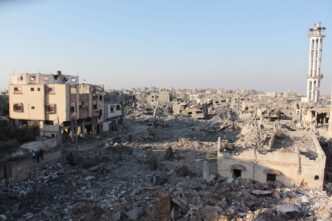
Maybe what I said is a great tragedy for me, but when I was in 2022 in localities around Kyiv that the Russians bombed, it was a shock. Twelve-story buildings flattened; people among rubble. People wouldn’t do such a thing. I don’t understand when Russians became so barbaric. I really don’t understand.
Some say you should come to an understanding with them.
I said this in another interview, but I want to tell you too:
When we lived in Uzbekistan, we had a dog in the yard. Like any child, I loved dogs. But it went rabid. When I heard, I brought it water, but it jumped at me; it was leashed down. I shouted to my father; I told him it jumped at me. My father called the veterinarian, who said it was rabid and had to be killed. I heard that and threw myself into my father’s arms and started crying, begging him not to kill it, to give it medicine.
My father stroked my head and told me it couldn’t be done: a rabid dog must be killed. My mother took me away; I don’t know what happened. Surely they killed it. Putin is a rabid dog. There is no other chance.
Rep.: And why don’t the Russian people rise up?
R.C.: I would have liked to say the people have no guilt, that they live under fear, that it’s a special situation. But from my point of view, deeply rooted in them, the Russians accept what Putin is doing.
They don’t realize we are in the 21st century, when there is no longer a need for territorial expansion, but for technology. They remained in the 19th, 18th centuries. They annexed Crimea and said it is their territory. They bomb Ukraine and say: “This is our people.” But I am convinced that if tomorrow they come here, they will also find a reason to say it is their land.
Rep.: In how many years will Ukrainians forgive the Russians?
R.C.: I am a historian, and in history many situations like this have happened. If we were to speak in time spans: hundreds of years, 500 years, 1,000 years.
After World War II, peoples forgave each other for what happened within 10–15 years.
The Ukrainians will never forgive the Russians, never.
Ne bucurăm că ne citești!
Dacă vrei să ne și susții: