

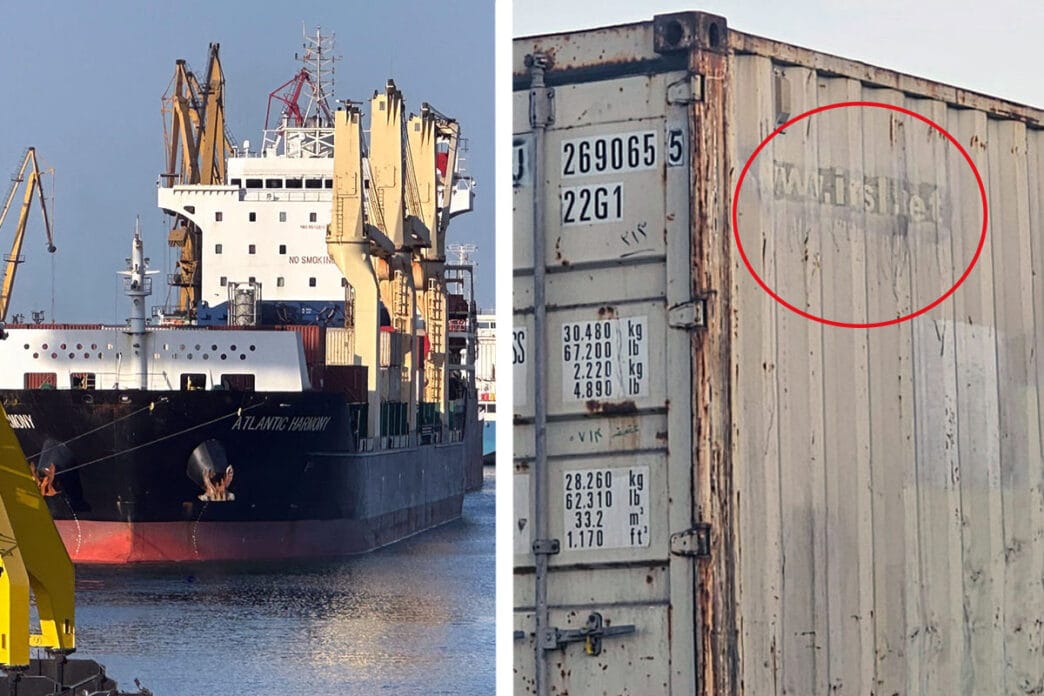
After Iran’s maritime fleet came under European Union sanctions for transporting drones for Russia, Iranian cargo containers continued to enter the Port of Constanța on ships flying different flags. Before reaching the Romanian port, these containers would meet with the sanctioned Iranian ships in various ports, most frequently in Turkey, an investigation by Info Sud-Est (ISE) reveals.
ISE reporters tracked the routes of several ships and the document flow within the import/customs procedure for more than half a year:
The ships carrying containers from Iran always enter the same terminal in the Port of Constanța (SOCEP), the goods are brokered by the same Romanian company (Etamad Grup Sea and Land Transport), and the Romanian Customs Authority told ISE that it does not possess information about the goods brokered by the company.
- Details about the goods in the Iranian containers, the intermediary company, and the control procedure at Constanța Customs will be revealed in the next episodes of the investigation.
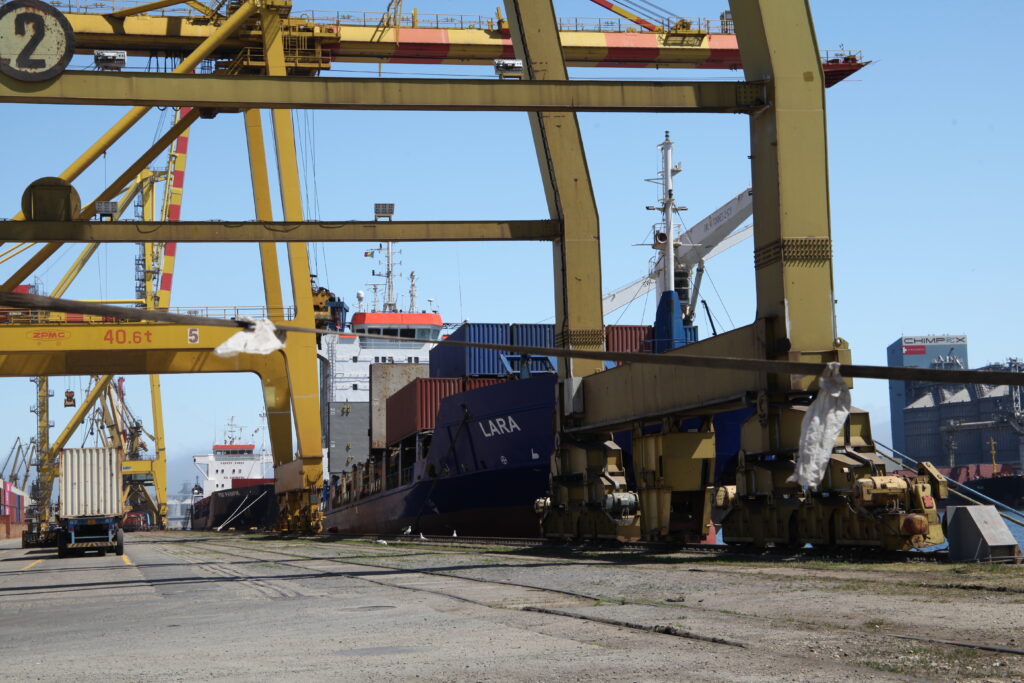
As early as 2019, ISE showed how an Iranian cargo ship that was under sanctions imposed by the United States (OFAC) for being suspected of transporting weapons for the Iranian Army and its paramilitary group, the Revolutionary Guards, entered the Port of Constanța and unloaded at one of the berths operated by the SOCEP company.

The ship „Shahr E Kord” was owned by the Iranian maritime transport company (Islamic Republic of Iran Shipping Lines (IRISL)), which was placed on the US sanctions list, imposed on Tehran after withdrawing from the nuclear agreement in 2018.
Since then until November 2024, at least three Iranian ships identified by ISE (Shiba, Daisy, and Azargoun), which were under American sanctions, have consistently brought cargo to the Port of Constanța, entering the same SOCEP terminal and being brokered by the same company, Etamad Grup Sea and Land Transport.

Things changed after November 18, 2024, when the EU also imposed sanctions against Iran’s national maritime transport company IRISL, because its ships are involved in transporting drones on behalf of the naval forces of the Iranian Revolutionary Guard Corps.
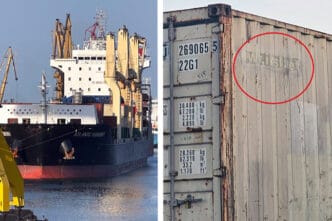
Iranian containers continued to enter the Port of Constanța, but brought by other vessels, under the flag of other countries (e.g., transports on January 9-10 – the ship Lara, Saint Kitts and Nevis flag, April 17-23 – also the ship Lara, and June 23-24 – the ship Atlantic Harmony, Hong Kong flag).
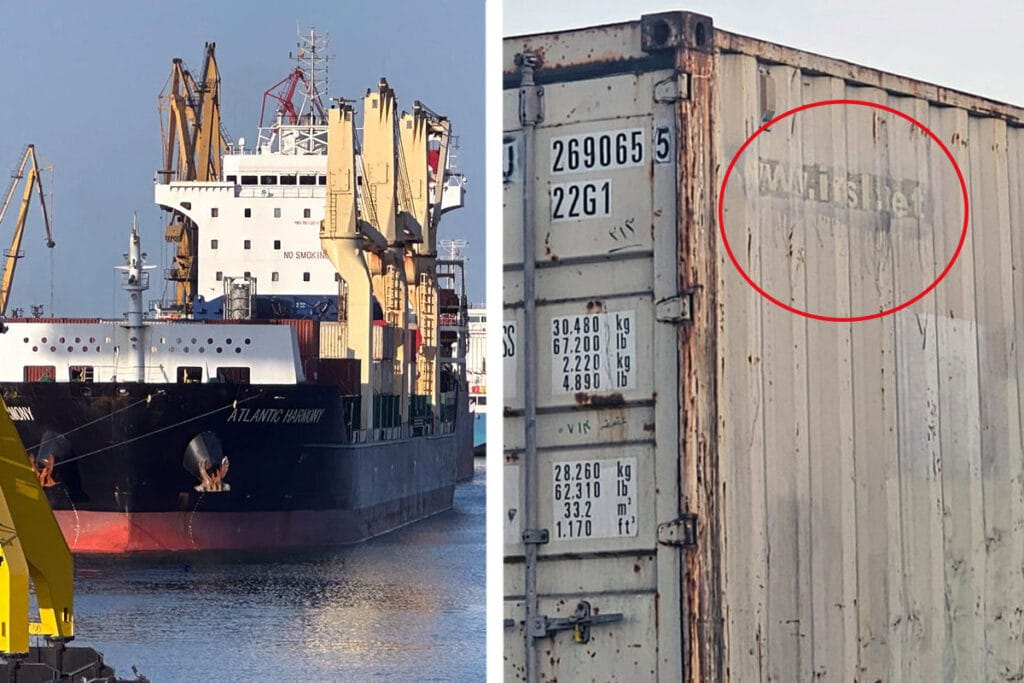
Many of the containers on the ships had the IRISL inscription erased or painted over, but even so, it remained legible on the containers from the most recent shipment, tracked by ISE on June 23-24.
Last but not least, according to the entry schedule of ships into the SOCEP terminal, from January 9, 2025, consulted by reporters, next to the Lara vessel appears the index corresponding to Hafiz Darya Arya Shipping Company (HDSL, HDASCO, or HDS Lines) , a subsidiary of the Iranian national maritime company IRISL, also under EU and US sanctions. Sources.
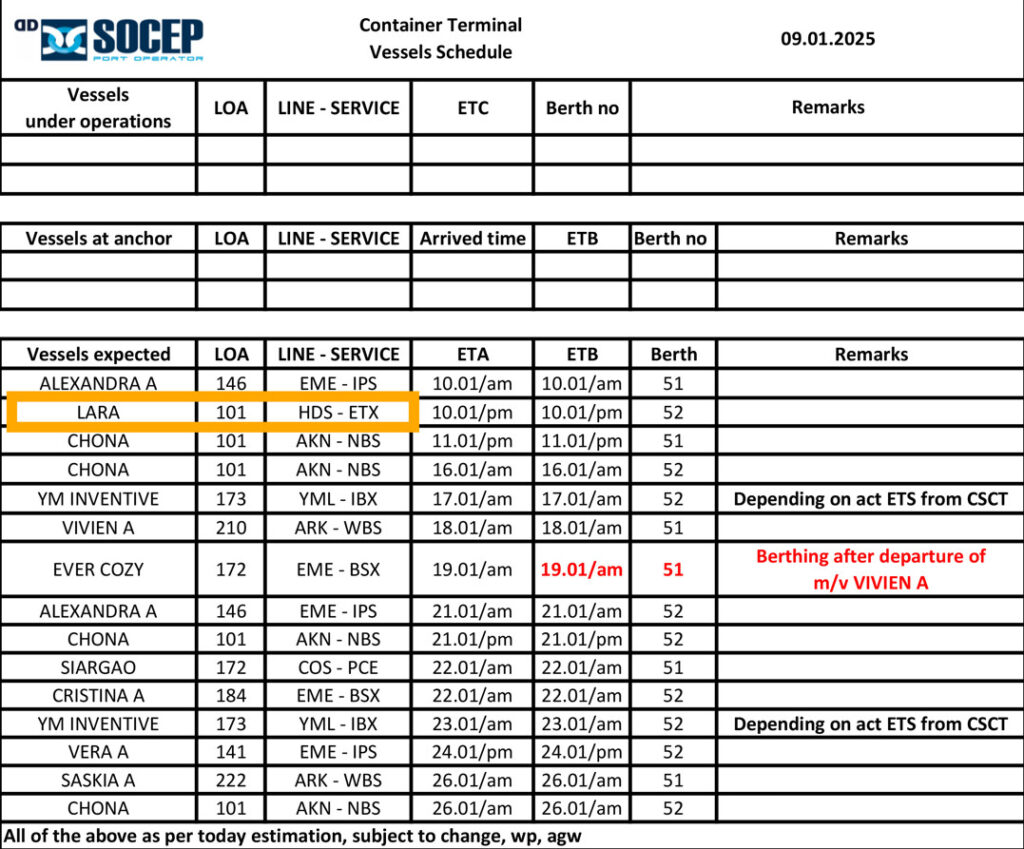
On the other hand, the manifest prepared for the entry of the ship Lara into the Port of Constanța, consulted by ISE, lists the Iranian company HDSL under „Freight Manifest Carrier.”
- The phrase Freight Manifest Carrier refers to the carrier that owns or manages the cargo manifest for a specific shipment.
- The cargo manifest is the primary document for a shipment, containing the details of all goods on a ship during transit. The manifest is an overall „snapshot” of the ship’s cargo and is used by customs inspectors when checking goods upon their arrival in port.
Lara – The transport from January 9-10, 2025
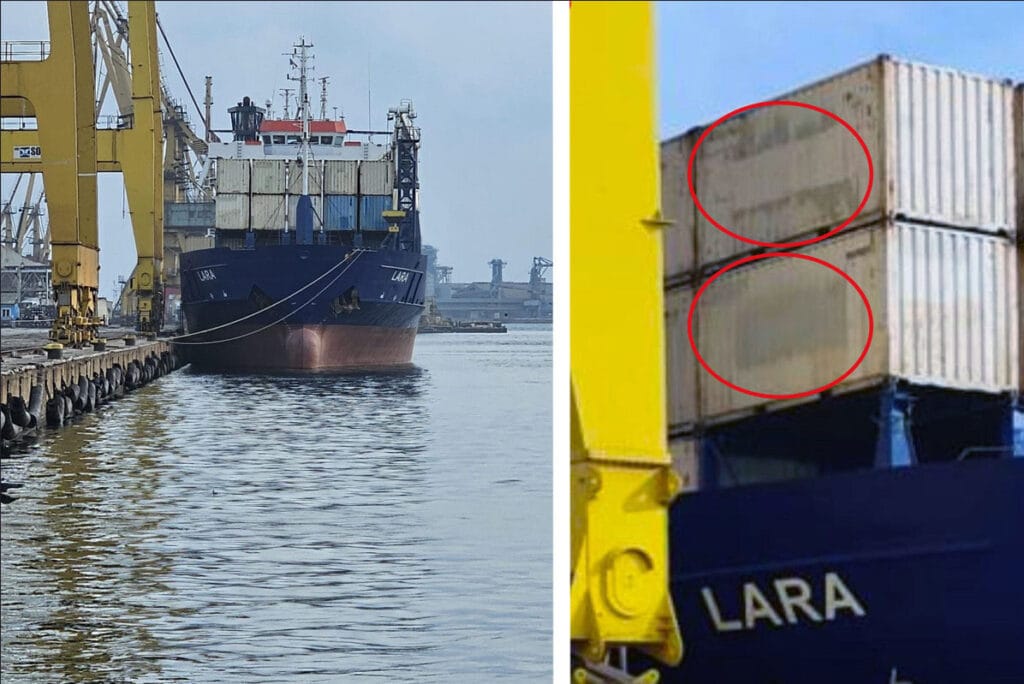
Lara – The transport from the 17th of April, 2025
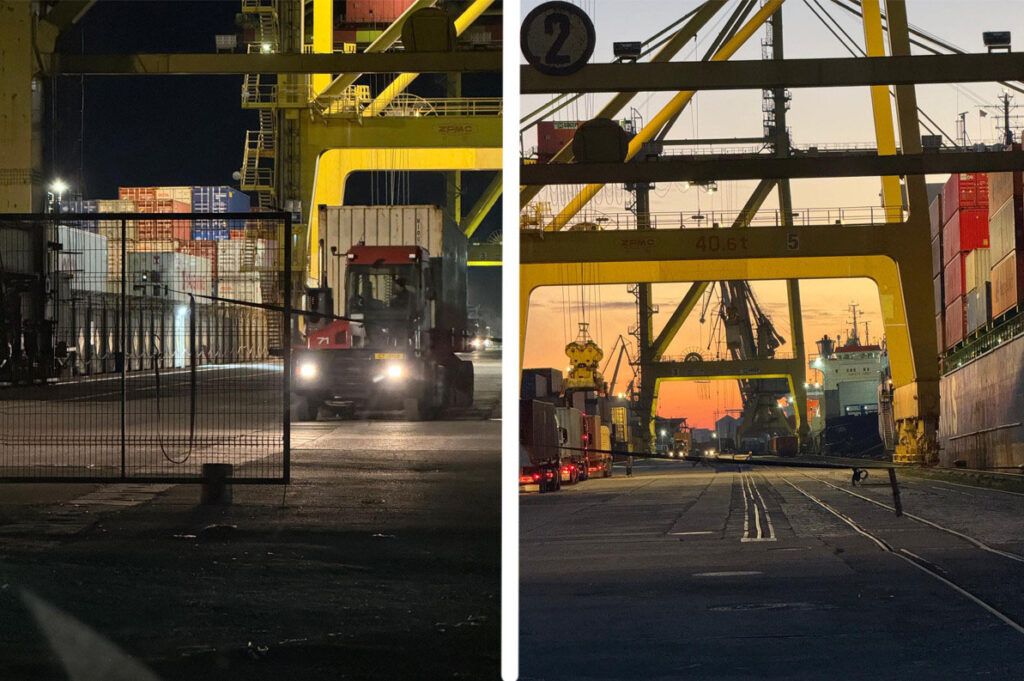
Atlantic Harmony – The transport from the 23-24th of June, 2025
An investigation by the specialized maritime publication Lloyd’s List, signed by maritime risk analyst Tomer Raanan, showed on November 17, 2023, how the owner of a modest restaurant in South London became the front for a fleet of outdated gas tankers, used to transport sanctioned Iranian propane and butane worth hundreds of millions of dollars. Read the investigation here.
Another investigation, published on June 27th, 2025, by the business and economic news site Market Place, shows how the „shadow fleet,” a group of tanker ships used by entities such as Iran and Russia to sell oil on the global market despite Western sanctions, is growing. These ships often operate in a legal gray area and now constitute an impressive 17% of all international tankers worldwide, according to an Allianz report cited by Market Place.
These shadow ships, the investigation further shows, frequently use deceptive tactics. For example, they falsify GPS data to pretend they are loading oil in an Iraqi port when they are actually in Iran. They carry false insurance documents and transfer their cargo from one ship to another, just to mislead anyone monitoring them via satellite.
Elisabeth Braw, a senior researcher at the Atlantic Council cited by Market Place, says these ships are in poor operating condition:
- „They are often old,” she said. „They should be disassembled. An old, poorly maintained ship presents significant risks of accidents and incidents, just like an old car.” Read the full investigation here.
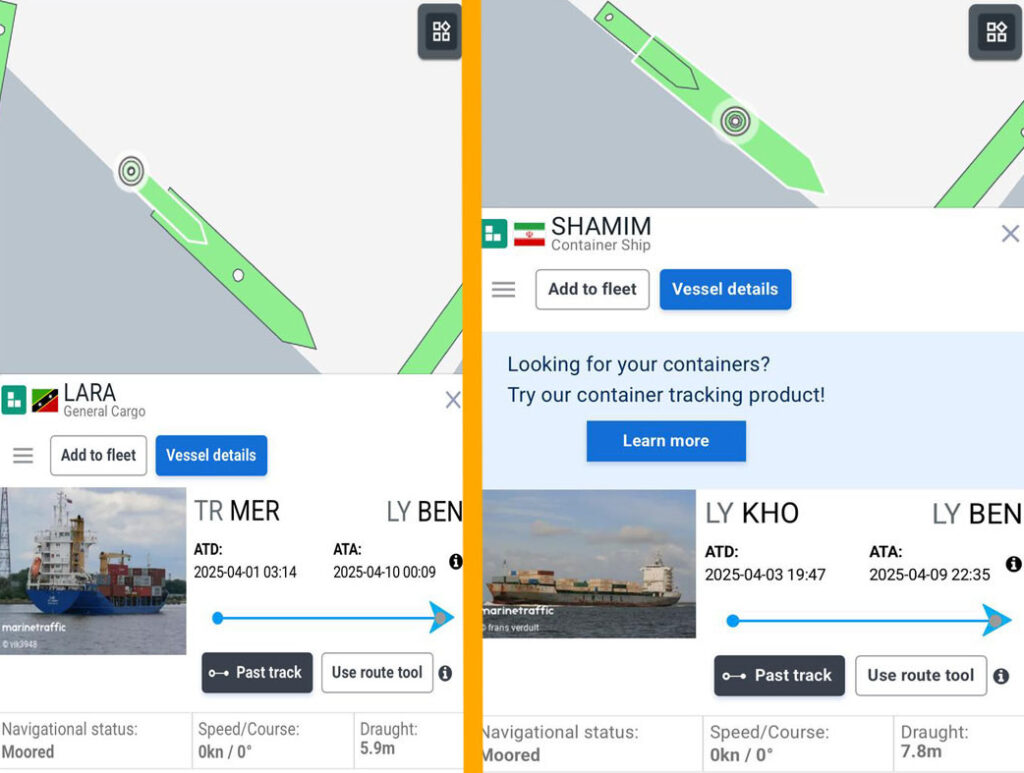
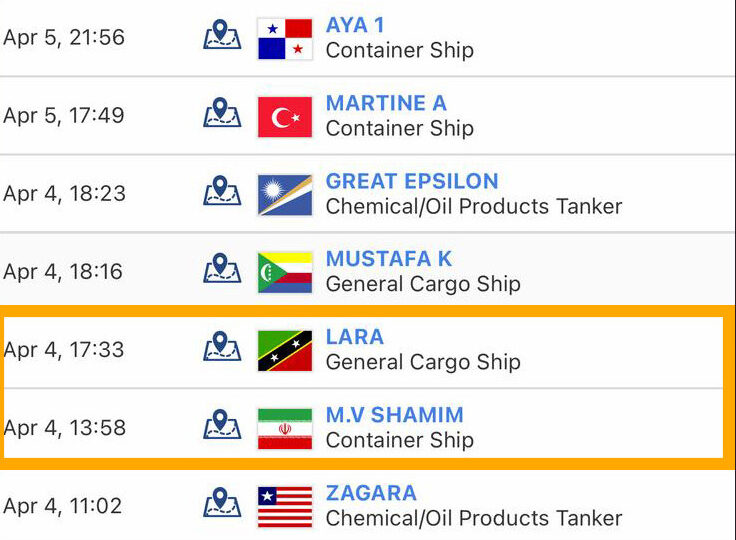
This is also the case for the Lara vessel, which often arrives in different ports (most frequently in Turkey or Libya) on the same day and at approximately the same time as sanctioned Iranian ships. From those ports, Lara has arrived in Constanța multiple times where it unloaded cargo.
Lara, arrested for dozens of on board deficiencies
Following the entry into force of EU sanctions against Tehran’s fleet, the Iranian ships Shiba and Elyana met with the vessel Lara in Haydar Pasha Port (Turkey). From there, the Lara departed, loaded with containers, for Constanța Port, where it was arrested on January 12th.
According to the specialized portal vesseltracker.com, the Lara vessel was arrested for 32 „serious deficiencies”: a significant number of essential ship certificates and documents were not valid, and several issues were identified concerning the sailors’ rest and work hours records, ship safety, the emergency system, personnel training and qualification, etc. Nevertheless, the ship was released and departed from Constanța Port on January 18th.
SOCEP representatives, at ISE’s request, stated that in Romania there are authorities responsible for controlling the aspects reported by journalists:
„According to the procedures and working methods in Constanța Port, there are a series of authorities with responsibilities and competencies in accepting ships and goods, including those in containers, in the Constanța Port. Regarding the information in the text, we inform you that many of these are inaccurate and incomplete, but it is not our purpose to indicate and comment on them,” the company stated via a phone call. The person who called from the phone number displayed on SOCEP’s official website refused to identify themselves.
Reporters insisted they indicate the inaccuracies they were referring to, but the person who identified themselves as a „SOCEP representative” stated they did not wish to make any further comments.
Etamad representatives did not provide a point of view at ISE’s request by the time this article was published.
The Customs Authority says it doesn’t know what goods arrive from Iran in the Constanța Port
We asked the Romanian Customs Authority (AVR) how many controls Constanța Customs performed between 2020-2025 on goods brought by the agent Etamad Grup Sea & Land Transport SRL to Constanța Port.
AVR did not respond regarding the number of controls performed on goods arriving in Iranian containers, but stated that the intermediary company does not submit customs declarations through the electronic system owned by the institution, thus not possessing information regarding the goods intermediated by the company:
- „(…) we specify that, not being an economic operator that submits customs declarations through the electronic systems owned by the customs authority, we do not possess information regarding the goods for which the company in question provided various services (transport/expedition, etc.).”
However, ISE sources from the Romanian Customs Authority, Constanța Customs, and Constanța Port explained that each transport is registered at customs by the shipping company, in this case Etamad, and subsequently a customs broker prepares the customs declaration, based on the documents submitted by the importer.
- Note: Customs brokers are hired by economic agents to handle all the bureaucracy of transactions. They are intermediaries between state authorities and goods owners and prepare all necessary documents for the goods arriving at the port to be cleared and pass inspection, then depart to the final recipient.
In other words, AVR and Constanța Customs have no way of not possessing information about the goods intermediated by Etamad, the cited sources further explained:
- „No. Excluded. The submitted manifest includes the name of the sender, the name of the recipient, the container series, the type of goods, the containers, etc. When the ship arrives, the shipping agent (i.e., Etamad, editor’s note) submits an entry summary, the first to be processed electronically, and contains approximately the same data as the discharge manifest,” AVR sources explained to ISE.
- „(…) So the intermediary company is obligated to submit the manifest for registration. After the ship’s arrival control, it takes the manifest and submits it to customs to register the goods. For customs clearance, the recipient of the goods comes and submits the documents to the brokers. The manifest is submitted by the ship’s shipping agency (in this case Etamad, editor’s note) to the customs office to register it,” sources from Constanța Port explained to ISE.
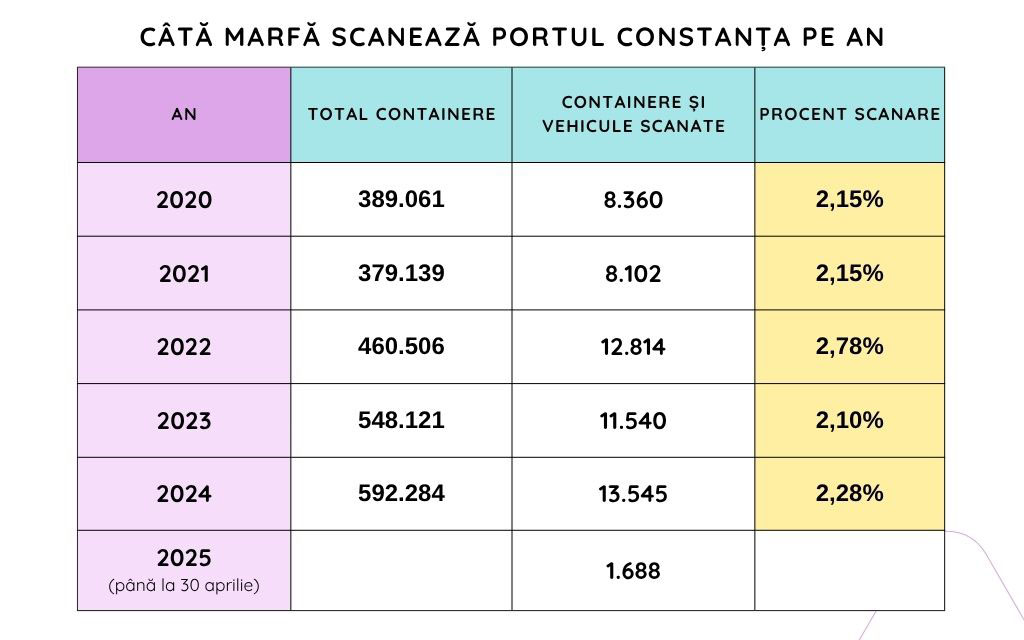
Constanța Port Customs scans under 2.3% of containers annually
We also asked how many scanners are operating in Constanța Customs, what their capacity is, and how many containers have been scanned from 2020 to the present, broken down by each year.
AVR stated that in Constanța and Agigea Customs, a fixed scanning system for containers and vehicles is operational.
„At the level of the Constanța South and Constanța border customs offices, a fixed scanning system for containers and vehicles has been operational since 2005. This will be replaced by the end of October 2025 with a modern scanning system, in order to detect undeclared goods, contributing to the fight against smuggling, customs and/or fiscal fraud.”
AVR also stated that this system has a processing capacity of approximately 15 trailers/containers per hour. It should be noted that the number of containers that transited Constanța Port in 2024 was almost 600,000. Of these, according to information provided by the Customs Authority, only approximately 13,000 were scanned, which is under 2.5%. Read AVR’s full response here.
Ne bucurăm că ne citești!
Dacă vrei să ne și susții: