

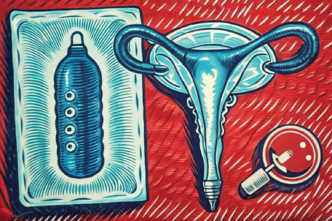
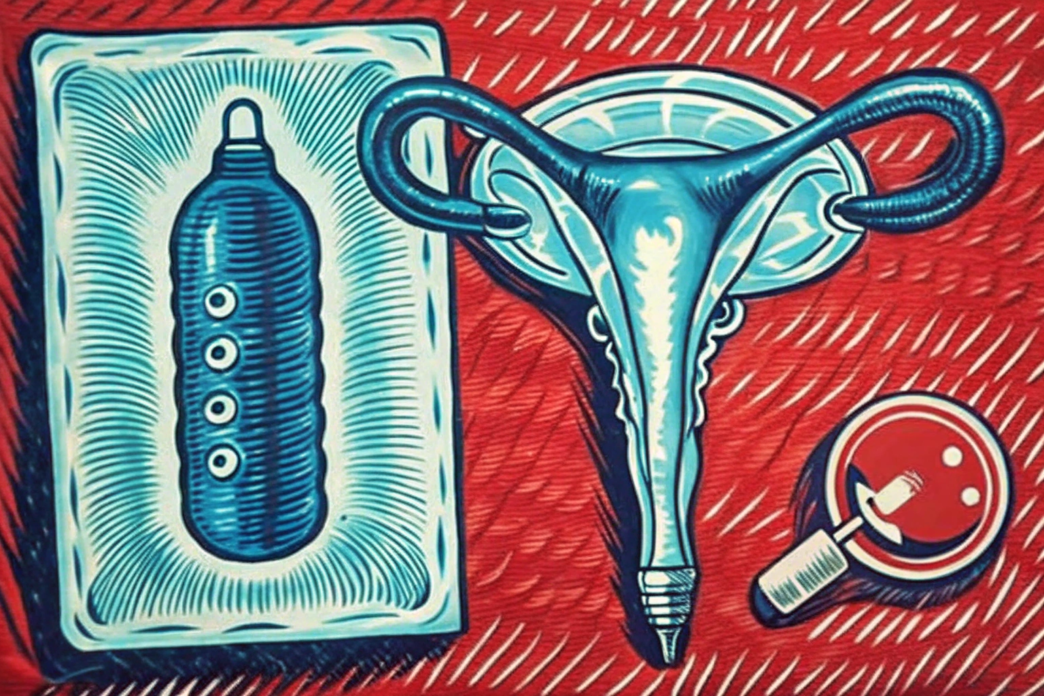
„On Paper Only” is a campaign launched at the end of January by the FILIA Center and the Gender Coalition, with the support of Doyle Dane Bernbach and the Regina Maria network, which aims to unlock the 7.5 million lei budget for the National Contraception Plan.
The campaign is inspired by the 20 lei banknote, on which Ecaterina Teodoroiu is illustrated and which serves as a symbol of the petition, being put into circulation in 2021 to celebrate women, but rarely found in Romanians’ wallets.
Like the 20 lei banknote, the National Contraception Plan has also remained only on paper, according to the message sent by the FILIA Center on their website. The petition can be signed once you go here.
The initiative of the FILIA Center and the Gender Coalition aims at the reimbursement of contraceptive methods, but the budget of 7.5 million lei remains blocked by the Ministry of Health since the launch of the National Health Strategy 2023-2030.

The campaign’s promotional video features actress Ilinca Manolache talking about the low number of national initiatives dedicated to women.
In 2023, more than 200 NGOs jointly sent an open letter to the Ministry of Health and the National Health Insurance House, calling for free allocation of contraceptive methods, especially for people from disadvantaged backgrounds, but to no avail.
Signing the petition equals 20 lei, the same amount as the Ecaterina Teodoroiu banknote launched in 2021, which is „unlocked” once the petition is completed. The total amount unlocked reflects the total number of signatures collected.
Unblocking the budget for the National Contraception Plan would mainly help and encourage women in Romania. Using contraceptive methods helps prevent sexually transmitted infections and avoid unwanted pregnancies. The campaign would encourage both women who have not had the opportunity to use these methods so far and those who are not well informed to educate themselves and adopt contraceptive methods if they so wish. Another demand of the petition is the introduction of sex education classes.
Romania is the country with most children giving birth. According to Agerpres, which cites the National Statistics Institute, in both 2020 and 2021, Romania had the most children born to underage mothers. Luxembourg was the state with the lowest number of children born to underage mothers in 2021, namely 14.
The petition’s home page features examples of good practices, including 17 EU countries that subsidize contraceptive methods. Also listed on the page are available contraceptive methods and options as well as the World Health Organization’s recommendations for a healthy sex life.
„There is a lack of a gender perspective and awareness of the problems women and girls face throughout their lives”
Cristina Praz, expert in communication and gender equality at the FILIA Center, spoke to ISE about the „On Paper Only” campaign and Romania’s position on sex education.
Asked whether she believes that making contraceptives available to women would encourage their use, Cristina says that making contraceptive methods more accessible, together with sex education and national information campaigns would encourage their use.
In the context of the lack of information and limited access to contraceptive methods, a nationally representative survey conducted by FILIA shows that 70% of women in Romania have not used any contraceptive method in the last 10 years.
Cristina explains that the „On Paper Only” digital petition aims to release the budget for the National Contraception Plan, which is already in place, thus ensuring real access nationwide. In order for this plan to be implemented throughout the country, including in rural areas, it is essential to have specialists to develop methods of education, which can be realized with the released budget.
The communication and gender equality expert says that „On Paper Only” is an awareness-raising and mobilization campaign, designed to convey to the government that budgeting the National Contraception Plan is a priority for women in Romania, as demonstrated by the signatures collected during the campaign.
- „But our work is not limited to this, we are also involved in other advocacy actions, from round tables to open letters, to ensure women’s real access to reproductive health services”, says Cristina Praz.
In addition to the reimbursement of contraceptive methods, the petition also aims to introduce sex education classes and national information campaigns. Cristina emphasizes that these are essential points to educate people on the subject and increase the rate of contraceptive use.
In order to convince young people who have not benefited from formal sex education and have „self-educated” themselves through the internet or from the accounts of others that unprotected sex is not „cool” and not safe, Cristina emphasizes the need for age-appropriate communication and information campaigns.
The FILIA Center uses social networks to carry out such educational campaigns, creating a community of young people interested in sex education, feminism and gender-based violence. However, organizations in this field have limited resources, and the need for national campaigns, conducted in schools and through accessible media, remains significant.
- It is precisely this lack of systemic information that pushes young people to learn about sex and their bodies from porn movies, the internet or all sorts of dubious sources. Young people need information tailored to their realities, needs and interests. Without being ashamed or stigmatized, otherwise they will go back to the same unreliable sources where they „learned” so far”, adds the communication and gender equality expert.
Asked what Romania lacks as a society to open up and implement real effective solutions to counter the phenomenon of underage mothers and the protection of women’s rights, Cristina states:
- „There is a lack of a gender perspective and sensitization on the problems women and girls face throughout their lives. Changing mindsets requires a lot of time and systemic resources: gender-sensitive education, national campaigns, specialized training of different institutions. But for all this you need plans that are actually budgeted for, not just on paper”.
Cristina points out that women’s safety and health are still treated as optional, and the experiences of violence or discrimination they face are often blamed or questioned.
It is essential that women’s voices are heard and believed and that state institutions are prepared to support them, she says.
It also requires allied politicians who are willing to support public policies that guarantee women’s safety and health.
Ne bucurăm că ne citești!
Dacă vrei să ne și susții: