

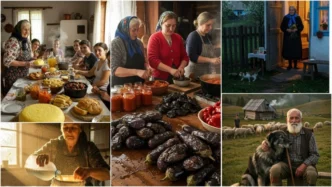
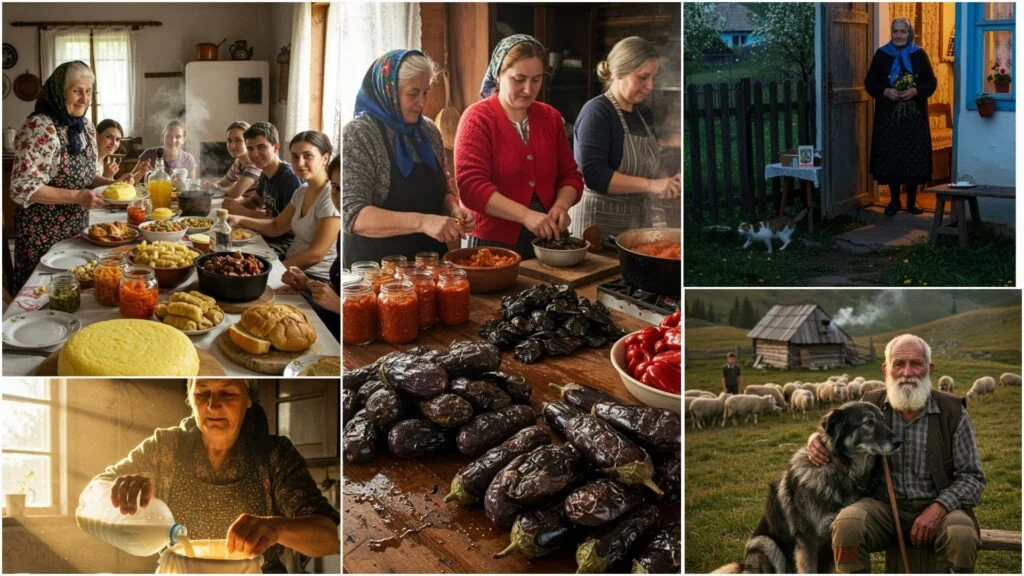
„Today is my birthday. My parents are not with me, but my grandma made me this cake”, „I put a lot of effort into this, but unfortunately nobody appreciates it” – these descriptions are often accompanied by emotional pictures of crying children holding a cake in their arms, or „craftsmen” posing next to sculptures made of wood, ice or other materials, or various photos that can provoke emotion among Facebook users. This type of content has flooded many Facebook users’ feeds, but what is it really about and why is it going so viral?
- Note: In the electoral campaign for the presidential elections of November 2024, such Facebook pages or similar groups, which were viral or had a large number of members/followers, turned into an electoral springboard and political support for the former pro-Russian candidate Călin Georgescu. G4Media& Info Sud-Est will follow in the electoral campaign for the presidential elections on May 4 if the pages analyzed by the reporters in this material will turn into tools of support for any of the presidential candidates.
The folks at Factual, which specialize in fact-checking, verified whether or not the photos posted by these Facebook pages are real. After checking and running them through software that can detect whether a photo is made with AI or not, several such photos turned out to be created with the help of artificial intelligence.
One of the things that all the pages that produce or distribute this type of content have in common are their names, most of them contain the word or derivatives of „România”: „Viața de românaș”, ”România Eternă”, „România Modernă”, „România Noastră” etc.
All are intended to provoke nostalgia.

Another aspect is the type of content distributed on these pages. All of the AI-generated photos are themed in a ‘traditional’, ‘country-style’ way and are accompanied by either short descriptions, intended to evoke emotion, or long stories about life in the countryside or about people working in fields such as housekeeping, construction or fields involving some degree of physical labor.
These descriptions and stories are also created with the help of artificial intelligence and are customized to appear traditional and nationalistic and to elicit as much empathy as possible from „patriotic” Facebook users.
The posts on these pages quickly went viral and managed to bring tens of thousands of reactions and comments. Most of the users who interact with them are adult or senior Facebook users, who leave messages of appreciation and well wishes to the fictional characters in the posts, because they are either not familiar with the idea of artificial intelligence or do not realize that the photos are not real. The comments and the large number of shares show that users believe that these posts belong to real people or evoke real events, and contribute in large part to their viralization.
How these posts became viral
Another factor that has helped this content go viral is the way Facebook’s main page suggests posts. According to CNN, Facebook’s home page has started showing more and more posts from pages or people you don’t follow, to diversify the content you receive on a daily basis. These updates increasingly mimic TikTok’s homepage, where 90% of your content is from strangers.
This update also encourages those who own such pages to produce as much content as possible because they have a high chance of appearing on people’s feed and going viral.
Although Facebook’s algorithms encourage these pages to produce such content, some pages also turn to paid advertisements through Meta Ads. One of the pages that is popular for its AI-powered content, Viață de Românaș, is using paid ads to go viral.
Two other pages, România Eternă and România Modernă, use paid ads to promote polls that ask people whether the Ceaușescu spouses deserve respect or not. Other similar posts are made with personalities such as God or Anca Alexandrescu, a Realitatea Plus presenter who has become popular on social media lately because she has associaged herself in recent months with former pro-Russian candidate Călin Georgescu.
„This is the leverage I use to generate income.”
This viralization seems to be productive for those behind these pages, as a TikTok user named Eren Bratu posted about how one would make money from this through the Facebook Content Monetization Beta, started by Meta less than half a year ago.
Eren Bratu shows step-by-step on his TikTok page how he makes money from the scheme, and in several videos he shows how he creates the photos with the help of artificial intelligence, the descriptions and how much money each post would bring him.
In the description of one video posted on his page, he mentions that „The world is so naive, but AI is also getting so good that whatever you post they think it’s real (especially older people who hang out on Facebook), and that’s the leverage I use to generate income”.
According to the tutorial he posted on Youtube, you can get into the Meta content monetization program if you have 5 videos posted on the page, 60,000 minutes watched and over 5,000 followers.
However, this rapid viralization scheme is not invented by Romanians. The phenomenon has been present abroad for several months now, and the main problem in all countries is how older people believe everything that is said in those posts and how they contribute to their viralization. A Youtube video made by Youtuber Danny Gonzalez explaining what’s up with this phenomenon and titled „Boomers are being fooled by AI on Facebook” has garnered over 6 million views.
Rolling Stone shows how posts made with AI are spam that Meta algorithms, which are supposed to weed out spam, can’t fight. The sheer number of pages and posts producing such content is beyond the capacity of those who are supposed to regulate Facebook users’ main pages. Rolling Stone adds that once you react to one such post, the algorithm will flood your pages with dozens of similar posts.
Ne bucurăm că ne citești!
Dacă vrei să ne și susții: