

Two years have passed since the massacre carried out by Hamas terrorists in Israel, on Yom Kippur, the most important religious holiday in the Jewish calendar, when approximately 1,200 Israelis—civilians and security forces—were killed by Palestinian terrorists.
Hamas launched thousands of rockets at Israel and sent dozens of fighters across the country’s heavily fortified border—a massive show of force that caught Israel off guard during an important holiday. The same thing happened 50 years earlier, in the Yom Kippur War, when Egypt and Syria surprised Israel precisely because the army’s mobilization was reduced during the most solemn holiday for Israelis.
Two years after the massacres, Israeli society is divided between commemorations and negotiations to save those who are still alive—the Israeli hostages in the tunnels of the terrorist organization. Today, 48 hostages remain in Gaza, of whom only about 20 are believed to still be alive, according to information from Tel Aviv. And negotiations for their release are in full swing, two years after their abduction.
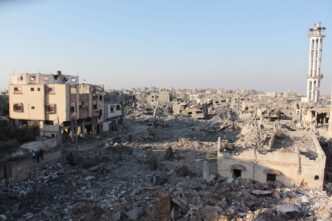
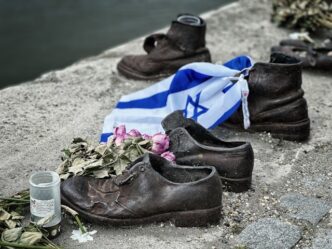
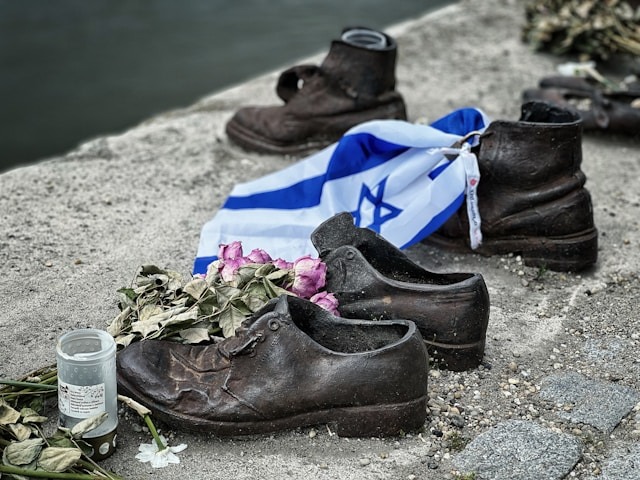
See here a photo gallery with images from Israel after Hamas’s bloody attack in 2023.

Israel’s counteroffensive
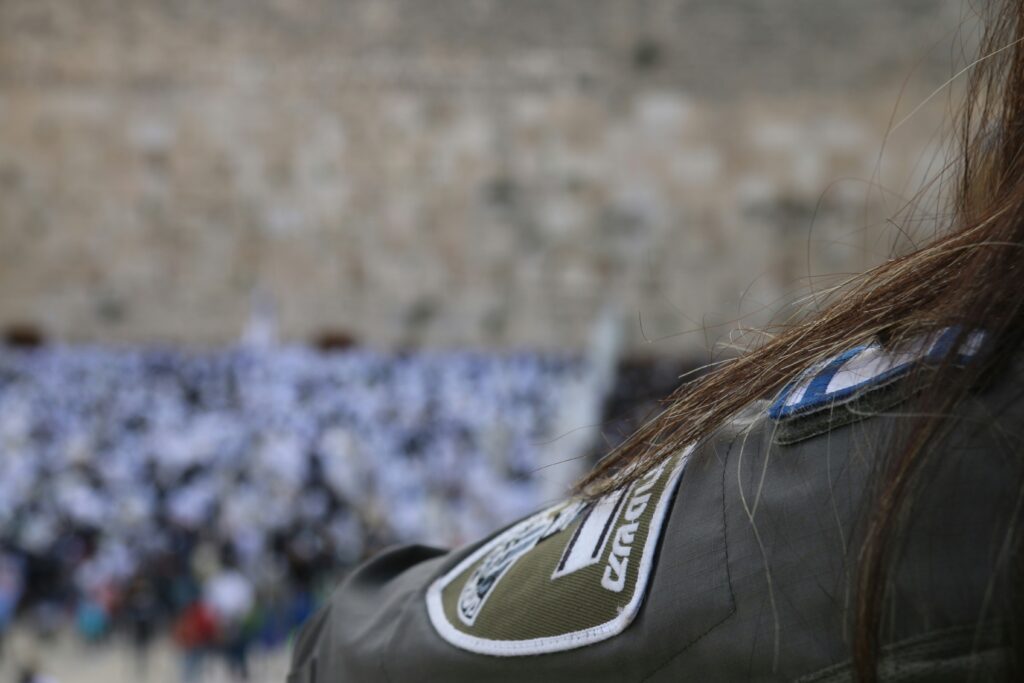
Israel responded harshly to the Hamas terrorists. The Palestinians’ attack of October 7, 2023 set off a chain reaction that brought Israel into war with Iran and its allies in the region, including the Hezbollah terrorist organization in Lebanon, which suffered major losses.
While in Europe Israel was sharply criticized by several governments and heads of state who used the term “genocide” for the massacres of Palestinians during Israel’s bombardments of the Gaza Strip, Donald Trump took the side of Prime Minister Benjamin Netanyahu, who governs Israel alongside far-right extremists, issuing multiple ultimatums to Hamas and threatening that otherwise something “very bad” would befall the Palestinian organization.
The United States also joined Israel by carrying out an attack on the Iranian military and nuclear program during a 12-day war in June. See details here.
In the meantime, Israel eliminated Iranian scientists important to Tehran’s nuclear program, drastically reduced their military capabilities, took near-total control in Gaza, and killed key commanders and generals of the terrorists. See details here.
But what Prime Minister Benjamin Netanyahu failed to do was to rescue the hostages who remain captive in inhumane conditions, subjected to abuse and torture, a fact that has sparked massive protests in major Israeli cities and in the capital, and has deeply divided society. Paradoxically, the Netanyahu government’s military aggressiveness has significantly isolated Israel internationally and brought Benjamin Netanyahu an arrest warrant issued by the International Criminal Court, which accuses him, just as it does the Russian dictator Vladimir Putin, of war crimes.
In addition, a poll published by The Times of Israel the day before the commemoration of two years since the October 7 massacre shows that 66% of Israelis (up 13% from the previous poll) believe the time has come to end the war in Gaza, the main reason being the danger posed to the hostages.
The poll, conducted by the Israel Democracy Institute, also shows that 66% of Israelis think Netanyahu should take responsibility for the failures related to Hamas’s October 7 attack and resign, either immediately (45%) or after the war (19%). See more details from the poll here.
Associated Press reports that the war has killed more than 67,000 Palestinians, but cites the Gaza Health Ministry, which is controlled by Hamas. In fact, there are currently no other independently obtained figures, and the Gaza Health Ministry does not specify how many of the victims were civilians and how many were combatants.
The ministry says that women and children make up about half of the dead, and many independent experts consider these figures to be the most reliable estimate of the war’s toll.
The Israeli offensive has displaced about 90% of Gaza’s population – around 2 million people – often multiple times, and restrictions on humanitarian aid have contributed to a severe hunger crisis, with experts saying that Gaza City is facing famine, AP also reports.
Israel, however, denies allegations of genocide and of waging war on civilians, saying it is a war of self-defense and that the army is “making extraordinary efforts” to avoid civilian casualties, while the Israeli government maintains that Hamas is to blame for the massacred population because it uses civilians as human shields.
In parallel with Israel’s isolation, antisemitism is rising rapidly in nearly the entire world, a trend noted as well by the British prime minister on the day marking two years since the October 7 massacres.
Starmer said that the last two years have been “a nightmare” and that antisemitism has escalated in the United Kingdom. The prime minister’s statement comes a few days after two Jewish men were killed during an attack on a synagogue in the city of Manchester, committed on Yom Kippur, the holiest day in the Jewish calendar.
Forty-nine percent of Palestinians in Gaza who say they would vote would still choose Hamas, according to data from the Palestinian Center for Policy and Survey Research.
However, Hamas came to power in Gaza through the vote of Palestinians who last had that right in 2006. Hamas came to power under the name “Change and Reform” and won 74 of the 132 seats in the Palestinian Legislative Council – almost twice as many as Fatah, the second-place party, an ISE analysis shows.
Since then, Hamas has fully seized power and there have been no free elections. The international community refused to cooperate with the newly elected officials and did not officially recognize them, but that did not stop Hamas from taking power by force in 2007.
Even so, Hamas remains popular among Palestinians today, according to polls conducted by the NGO Palestinian Center for Policy and Survey Research (PCPSR), which showed in May 2025 that overall support for Hamas is 29% in the West Bank and 37% in the Gaza Strip – thus Hamas remains the main political option for Palestinians in both territories, with the remaining percentages divided among Fatah, other tiny parties, and the undecided.
Among Palestinians who said they would vote in elections, support for Hamas is even higher: Of Gazans who said they would vote in parliamentary elections if they were held now, with the same political groups as in 2006, 49% would still vote for Hamas, according to PCPSR data. Read more details here.
How Israelis commemorate
The Guardian reports that Israelis are gathering across the country on Tuesday, and unofficial commemorations will take place in the small kibbutzim of southern Israel, whose members were killed or abducted.
At the same time, a large rally will be held in Tel Aviv to demand the release of the hostages still held by Hamas in Gaza. The official national memorial ceremony will take place on October 16 at Israel’s national cemetery on Mount Herzl, after the Jewish holiday of Simchat Torah.
The memory of the collective trauma of the attack two years ago, the deadliest single-day attack in Israel’s history, still hangs over the entire country. The faces of the hostages still held in Gaza are posted on bus stops throughout the country, and the homes that were set on fire by militants as they ravaged the kibbutzim remain burned out and abandoned.
A brief timeline from the first hours of the Hamas terrorists’ attack on October 7, 2023:
- On Yom Kippur, a Saturday, Hamas launched thousands of rockets at Israel and sent dozens of fighters across the country’s heavily fortified border – a massive show of force that caught Israel off guard during an important holiday;
- Hamas fighters entered the country by way of boats, paragliders, and trucks;
- Palestinian Islamic Jihad (PIJ) said its fighters joined Hamas militants in attacking Israel;
- Israel announced it was in a “state of war alert” after the surprise attack;
- The Israeli army said that about 2,500 rockets were launched from Gaza that morning, contradicting Hamas’s claims that more than 5,000 rockets were fired;
- A series of reports emerged of Hamas abducting Israel Defense Forces (IDF) soldiers;
- Israeli Prime Minister Benjamin Netanyahu began talks with then-U.S. President Joe Biden and released a statement: “We are at war and we will win”;
- Israeli news channel N12 reported that about 50 Israeli hostages were being held by Hamas attackers. The number later increased. Many of them were killed or died due to inhumane conditions and abuse; others were released; and others have been waiting two years to be freed.
Ne bucurăm că ne citești!
Dacă vrei să ne și susții: