


On the 1st of August, 1927, the longest-lived publication of the Legionary Movement, the magazine „Pământul strămoșesc” (The Ancestral Land), edited by lawyer Ilie Gârneață, one of the founders of the Legion, appeared in Iași.
- The legionary discourse and Ceaușescu’s brand of propaganda are today found mixed, with success among part of the electorate, in the speech of Călin Georgescu, the pro-Kremlin candidate who managed to reach the second round of the presidential elections from first place, thanks to a substantial help given by algorithms and a TikTok strategy, which Info Sud-Est and G4Media warned about 10 days before the elections:
The new political party’s ideas were being forwarded by the leaders of so-called „cross brotherhoods”, local groups tasked with managing the messages and following up on their implementation, particularly those of „Captain” Corneliu Zelea Codreanu.
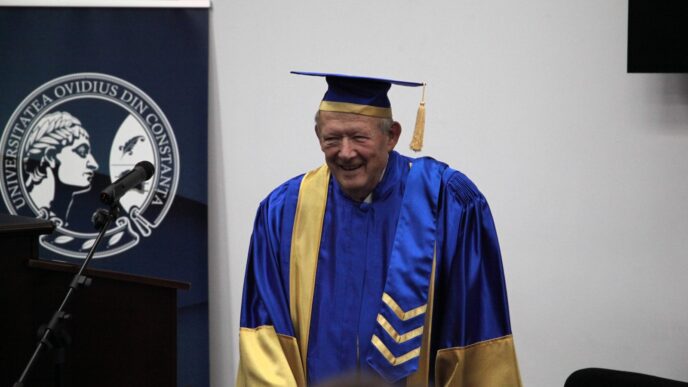
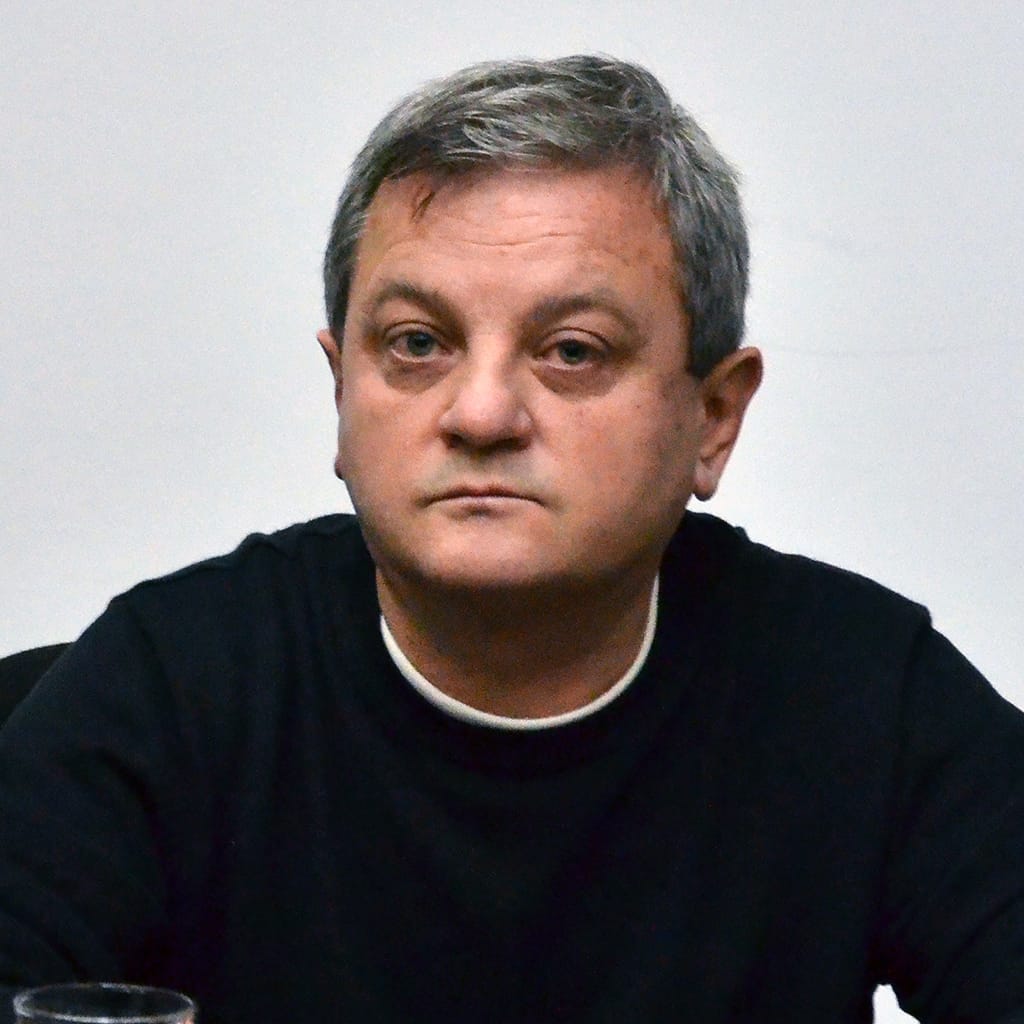
- Florin Anghel is a lecturer at the Faculty of History and Political Science (Ovidius University, Constanta), specializing in the history of Central Europe and the history of international relations in the 20th and 21st centuries. He earned hishis PhD in 2002, in Polish-Romanian relations. He was awarded the Premier of the Academy in 2005, with the volume Constructing the „cordon sanitaire” system. Polish-Romanian Relations, 1919-1926 (2003).
Nearly a century later, on the 1st of October 2021, Călin Georgescu founded the Movement „Ancestral Land” around a country project entitled „Food, Water, Energy”. The project commits itself, in the medium and long term, to „the elevation of Romania, through the creation of solid networks of small producers and craftsmen, a modern cooperation anchored in the principles of dignity and cooperation, the organization of activities, including cultural activities, which can lift the people from the state of abandonment in which they are”.
Călin Georgescu’s historical memory plays tricks not only on the totalitarian leaders of the Legionary Movement or the deeds of Ion Antonescu, but also on the reasons behind the collapse of communism.

Vladimir Putin and Belarus’s Aleksandr Lukashenko called the collapse of the communist Soviet Union „the greatest geopolitical catastrophe of the 20th century”. For his part, the Romanian presidential candidate denies the motives and intentions of the events of December 1989, which led to the ousting of Nicolae Ceausescu and the collapse of the communist regime: „The 1989 coup d’état was only the West’s aim to steal our resources and enslave our country. That was it!” he said in a TV appearance on the 5th of November.
The undeserved annulment of the memory of the hundreds of deaths of the martyrs of 1989 is a major attack on the historical reality and the institutional foundations of the state that Călin Georgescu wants to lead.
The „Cross Brotherhoods”, which functioned in the Legionary Movement in the 1920s and 1930s, were a kind of „social network” of today’s world, which „rolled” ideas in rural areas and urban environments about the „Country”, „Nation”, „Cross”, the pitiful state of local and central administration or the inabilities of institutions.
Most of the messages referred to endemic corruption and the inadequacy of the political class, traditional parties and constitutional rules to the demands and expectations of society. „Brave and unlucky,” was the designation for the „ancestral land” in the early 1930s, an entire rural community in a marginal county of the country, Maramureș.
„The Ancestral Land” claimed to be the most important legionary periodical. Its founder, Ilie Gârneață, after an exile in Germany after 1941 and then in Argentina after World War II, continued to print it in Buenos Aires from 1952. „The Ancestral Land” Gârneață wrote, „was the magazine of the beginnings of the Romanian spiritual revolution. No matter how many legionary publications have appeared since then, they have not been able to snatch this primacy from it. We will reaffirm in its pages the same legionary faith without being ashamed of it and without bowing to the theory of the „political moment”.
„The Ancestral Land” is also the title of an anniversary volume, on the occasion of the 50th anniversary of the Legionary Movement, which a group of political survivors of the Legion in exile printed in Buenos Aires in 1977.
The Legionary Movement campaigned for a „change of the times” through „The Ancestral”.
The political and social realities seen by the legionaries reflected poverty, social and economic backwardness, corruption and lack of state authority. The main culprits were the political parties, their leaders, and the constitutional institutions, which were seen as too bureaucratic and too slow in taking decisions. The head of state, King Charles II, who was involved in ensuring consistent power in the state and solid material and financial comfort, was held responsible for the fraudulent and wrong management of the state. The Legionaries did not call for the resolution of problems, including those within the parties, but for the annulment of democratic forms of decision-making and representation, even by assassination if necessary. Two prime ministers were killed by the Legionary Movement only six years apart: I.G. Duca in 1933 and Armand Călinescu in 1939.
The outside world was responsible, in the Legionary discourse, for changing traditions related to rural daily life, food, customs, family relations and social alienation. The foreigners, those from other countries or those from inside it, were alone responsible for the traumas that the „People”, the „Nation”, the „Romanians” had experienced in the past or even the recent past.
Romania’s foreign relations in the 1920s-1930s, centered on France and neighboring powers (Czechoslovakia, Yugoslavia, Poland), were not the solution for the development of the state, according to the Legionary messages. Alliances had to be forged with the powers that challenged the international order, at that time Nazi Germany and Fascist Italy. Only those who disrupted this order could secure Romania an important place in a „new order” that was to come and that was predicted by „Captain” Zelea Codreanu. Romania owed international recognition of the borders of Transylvania, Bessarabia, Bukovina and Dobrogea to the European organization after the First World War. The union of 1918 had been regulated by the rules of diplomacy and international law in the texts of the 1919-1920 peace treaties of Versailles, St. Germain, Neuilly and Trianon.
The themes of the legionary discourse and the memory of Ion Antonescu were taken up by Călin Georgescu through the ideology of Nicolae Ceaușescu.
The 1980s propaganda of Nicolae Ceaușescu and the communist regime’s politicians is almost entirely reflected in the campaign themes of Călin Georgescu, the presidential candidate.
The mentorship of Mircea Malița, one of the most important creators of the theories of the „independence and uniqueness of Romanian diplomacy” in 1965-1989, and the support of Sergiu Celac, former interpreter of Nicolae Ceausescu and Foreign Minister in the first year after the collapse of communism, have decisively influenced Georgescu’s ability to interpret realities.
Romania’s continued international isolation in the 1980s and the unprecedented worsening of economic and social conditions in the last decade of communism forced Nicolae Ceausescu to find ways to survive.
Using the historical memory of Romanians towards Russia/USSR and the idea of the exceptionality of the Romanian people in a complicated geographic and geopolitical space of the eastern half of Europe, Ceausescu introduced the propaganda about „national independence and sovereignty” in an almost North Korean form, implying the absence of any contacts with the outside world. It was not respect for his people but fear lest Moscow orchestrate a change in Bucharest that forced Ceausescu to find increasingly aggressive and scientifically primitive formulas to argue the need for „non-interference in internal affairs” by any large country, a „national path” of evolution and a total break in economic, financial, cultural and scientific exchanges with Europe and the world.
Historical actors were used in this propaganda creation, from Mircea cel Bătrân (Mircea „the Elder”) to Ion Antonescu, all carrying the same message of struggle against foreigners, against foreign threats, against everything that was not traditional or in accordance with „the Land”, „the Nation”, „the Country”. Romania’s entry into the war alongside Nazi Germany in 1941 was rewritten by Ceaușescu’s propaganda as an act of historical responsibility, of courage in the face of a hostile neighboring power, while the occupation of the territories beyond the Dniester, the Holocaust and the Roma genocide were either passed over in silence or presented in the light of the few positive instances. Instead of being held responsible, Antonescu became a „national hero”, the „Ruler”.
Even the recipes for daily nutrition, which are a permanent feature of Călin Georgescu’s speeches, also derive from the structures of Ceausescu’s ideology. In the 1980s, on the dictator’s instructions and under the supervision of doctor Iulian Mincu, most of Romania’s population underwent the experiment of „rational nutrition”, i.e. chronic lack of staple foods, especially meat, dairy products, fruit and vegetables.
„If we had more food, we would live as if we were at war”, was an everyday joke of those years. Perhaps Călin Georgescu knows it, but his young voters cannot understand it. A country’s leader’s obsession with the citizens’ menus is nowhere close to normality.
The appeal to legionary themes and to the memory of leaders such as Corneliu Zelea Codreanu or Ion Antonescu, to the formula of „Ancestral Land”, are specific forms of identification of Călin Georgescu with one of the most sinister political and ideological experiences in the history of Romania: communism.
Relativizing the crimes of the Legionaries and Ion Antonescu’s regimes, as well as contesting the moral and ideological value of the December 1989 change, in fact, represents the annulment of the fundamental ideas of freedom, transparency and respect for the people whose vote and supreme representation in the state he demands.
Ne bucurăm că ne citești!
Dacă vrei să ne și susții: