

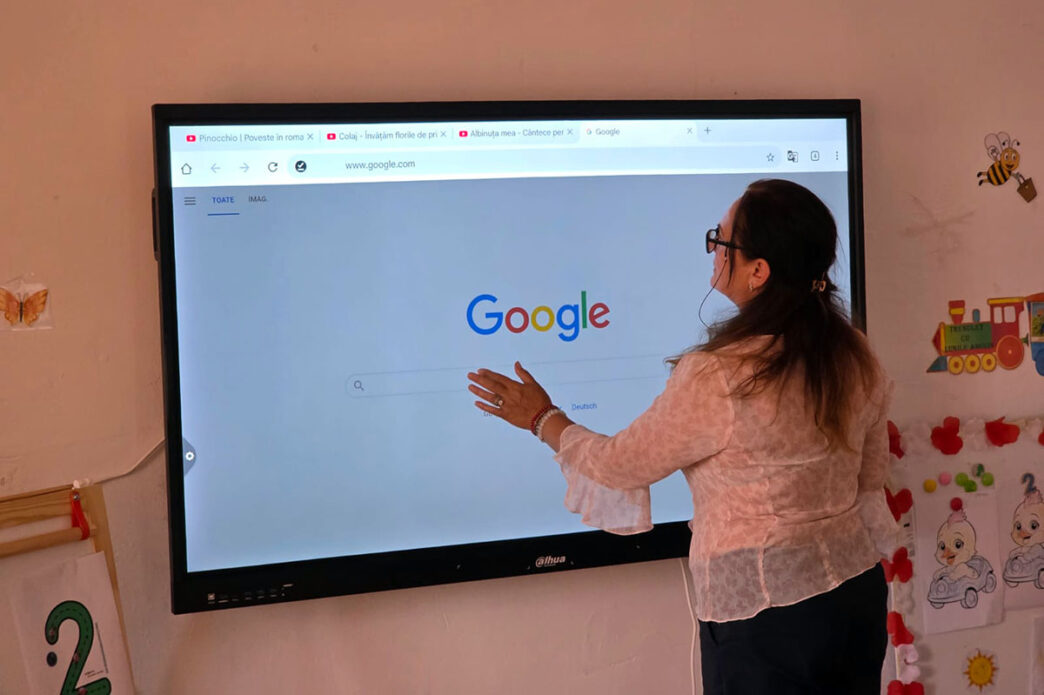
Only 20% of school furnishing and digitalization projects in Romania, funded with 1 billion euros from the National Recovery and Resilience Plan (PNRR), are completed on time, according to an investigation by Info Sud-Est (ISE).
The Romanian state needs at least 3 years to purchase computers, printers, and interactive whiteboards, shows the reporters’ documentation, which spanned three months with a focus on rural areas of Dobrogea, where there are localities with very high school dropout rates.
In Tulcea County, for example, only 11% of rural localities managed to implement equipment acquisition projects for the digitalization of kindergartens, schools, or high schools on time.
What’s the explanation?

The Ministry of Education claims that the main causes for the project delays were the lack of certain products on the market, as well as the very large number of beneficiaries who launched procurement procedures simultaneously.
This also explains how several companies identified during the documentation changed their CAEN activity codes to re-specialize from tourism or construction to delivering equipment and furniture for the digitalization of educational institutions.

In parallel, in Dobrogea’s most vulnerable commune in terms of literacy and poverty, with over 60% Turkish Roma population, the efficient and timely implementation of the project managed to bring students back to school and kindergartens, and most likely the dropout rate will start to decrease, say the local teachers.
A Billion Euro Opportunity
„This is a unique opportunity for Romania to change the face of Romanian education,” declared Ligia Deca, Minister of Education, in December 2022, when the competitive call for projects was launched. This call, exceeding 1 billion euros, aimed to equip Romanian schools with furniture, teaching materials, and digital equipment.
Through the National Recovery and Resilience Plan (PNRR), Romania committed to the European Union to equip 5,200 IT labs, provide IT equipment for the digitalization of learning resources in 3,600 schools, and bring new furniture to 75,000 classrooms.
Nearly three years after the call’s launch, an Info Sud-Est investigation reveals that only 20% of the approximately 2,500 projects contracted nationwide have been completed, despite the initial deadline being December 2024. For Romania to meet its PNRR milestones and targets, the deadline was extended until the end of 2025.
However, the Info Sud-Est investigation shows that as of June 2025, many of these projects are still stalled.
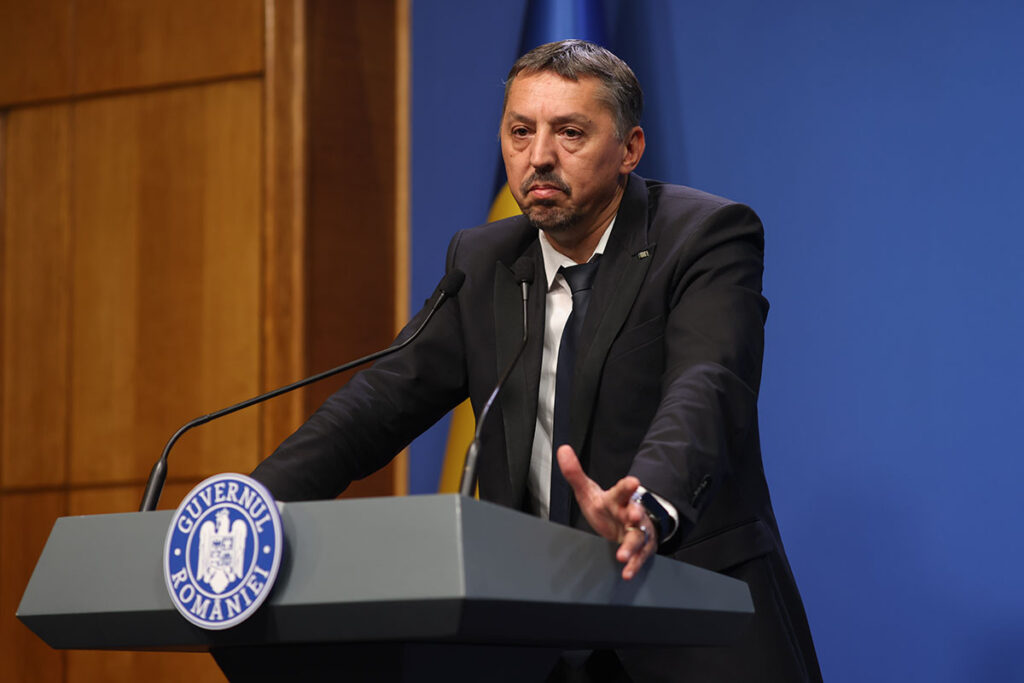
In an intervention for Edupedu.ro on Wednesday, the Minister of Education, Daniel David, even spoke about Romania’s risk of losing 1.7 billion euros allocated for this sector if a renegotiation of the plan had not been initiated.
HERE you can see the map with all the projects in the country for school furnishing and digitalization.
The Calendar of Incapacity – 3 Years to Buy Computers, Printers, and Interactive Whiteboards
Here’s a timeline illustrating the delays in the school digitalization projects:
- December 2022: The competitive call for projects is launched.
- April 2023: Deadline for submitting projects.
- May 2023: The Ministry announces the list of accepted projects.
- July 2023: The contracting process and information sessions for beneficiaries begin.
- December 2024: The initial deadline for project implementation passes.
- May 2025: The General Directorate for PNRR Implementation extends the implementation deadline to December 31, 2025.
- June 2025: Only 20% of the contracted projects are completed.
The Interim Failure of School Digitalization in Romania
However, in only 20% of cases have the projects been completed and students can enjoy the equipment. The assurance of digital transformation in schools and the encouragement of participation in education, as well as the reduction of school dropout risk, have been delayed for the other projects, even though we are only talking about equipment acquisition and not complex projects.
Romania
Of the 2,529 contracted projects, 511 have been fully completed, and 1,159 have an absorption rate of over 80%.
Constanța County
Of the 63 contracted projects, 17 have been fully completed, and 41 have an absorption rate of over 80%.
Tulcea County
Of the 45 contracted projects, 5 have been fully completed, and 19 have an absorption rate of over 80%.
Information provided by UEFISCDI on June 19, 2025, at the request of Info Sud-Est.
In Tulcea County, only 5 out of 45 projects, or approximately 11%, were completed by June 2025, two and a half years after the call was launched.
In May 2025, the General Directorate for PNRR Implementation extended the project implementation deadline to December 2025, stating: „Due to objective situations that could lead to the impossibility of achieving the milestones and targets contractually assumed by the beneficiaries of the calls.”
When asked about this situation, representatives of the Executive Unit for the Financing of Higher Education, Research, Development, and Innovation (UEFISCDI), an institution within the Ministry of Education that coordinates this project, declared:
- „At the request of the beneficiaries, the Ministry of Education and Research, in line with national initiatives, took the necessary steps to extend the implementation of the projects. The justifications sent by the beneficiaries for extending the implementation of the investments from the call included difficulties in meeting delivery deadlines due to the lack of certain products on the market or the very large number of beneficiaries who launched procedures at the same time, as well as the need to restart certain procurement procedures due to the non-submission of bidders or the existence of appeals regarding procurement procedures.”
Dobromir, Where Technology Brings Children Back to School
However, there is also a surprise in Dobrogea: In Dobromir, a locality at the end of Constanța, across from Bulgaria, with 6 villages and just over 3,000 inhabitants, half of whom are under 19, and approximately 900 are students. Or should be.
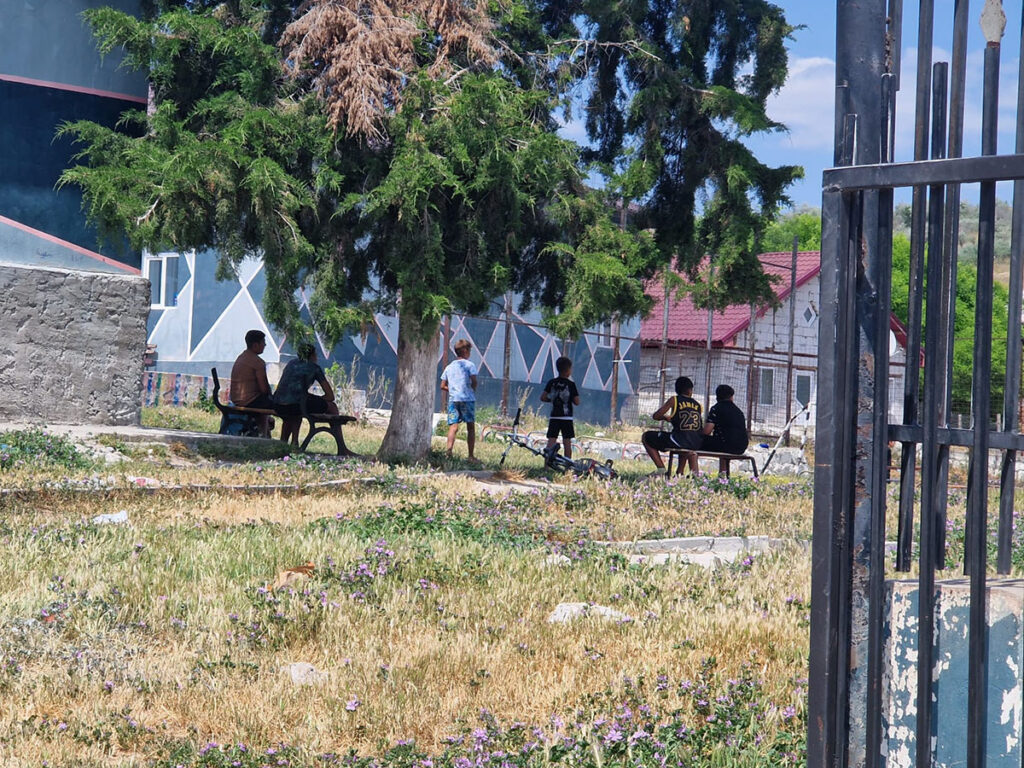
Dobromir is Dobrogea’s most vulnerable community in terms of literacy and poverty, with over 60% of its population being Turkish Roma and a very high school dropout rate.
The fact that these children in Dobromir do not speak Romanian or know how to read and write makes them vulnerable, risking isolation within their community near the Bulgarian border.
However, it seems the children are doing well now and have a chance at education. The combination of technology, NGOs, and the dedication of local educators, teachers, and professors has broken down barriers and is yielding initial results: children are starting to return to school because it now seems appealing.
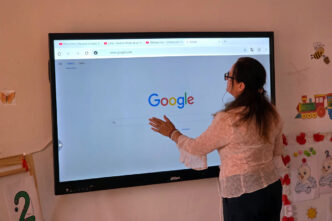
With smart tablets for virtual writing and erasing, YouTube, Google, and VR headsets, children feel closer to play than to dull schooling and theoretical lessons.

How did the teaching staff manage to make the leap from classic instruction, relying on textbooks, books, and note-taking sheets, to touchscreens and digital infrastructure?
„With a lot of patience from the teachers, investments in digitalization, and the essential help of specialized NGOs like Teach for Romania,” says Elena Făcălău, the deputy director of „Radu Prișcu” Vocational School in the locality, which is set to become a high school again.
Elena Făcălău, a kindergarten teacher, took digital pedagogy courses to make the technological leap necessary to keep pace with the needs of today’s children. She says that the smart boards purchased through PNRR don’t pose problems for the teachers; they’re like phones.
They also learned to work with Gemini, an artificial intelligence program that helps them create practical, attractive lessons for students, adapted to modern techniques for teaching new knowledge and information.
In contributing to the „reinvention” of teaching methods, the deputy director highlighted the role played by the former high school director, Professor Georgiana Frățilă, and the role now played by Professor Alina Maria Cîrneală, the current director of the vocational school in the locality, where students benefit from equipment for vocational labs also purchased with PNRR funds.
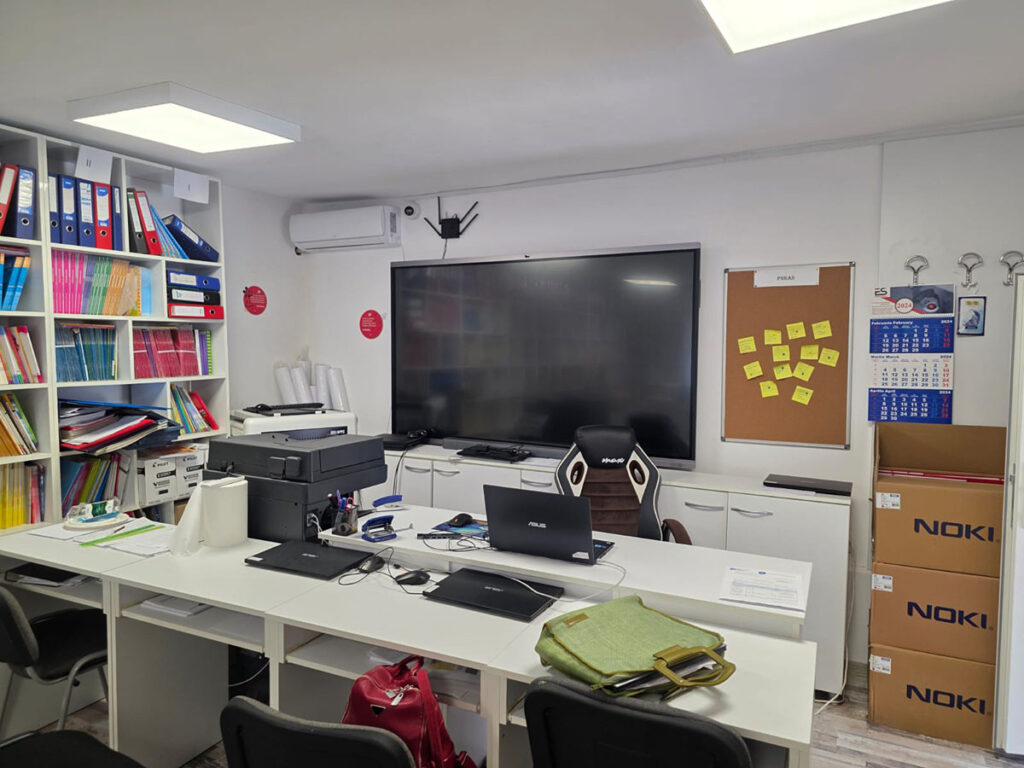
However, the issue of parents remains, who need to be convinced that, beyond traditions and customs, children must go to school, learn to read and write, and build a future and destiny of their own.
This is one of the biggest obstacles in the teachers’ efforts to bring children back to school, say educators from Dobromir. With the help of specialized NGOs and investments in digital school infrastructure, they have reinvented themselves and are optimistic that the community’s children now see school through different eyes: attractive.
In May 2024, the Dobromir City Hall signed contracts for equipping a high school, three schools, and five kindergartens with furniture, teaching materials, and digital equipment: computers, interactive whiteboards, printers, and VR glasses.
In total, 400,000 euros were invested from the PNRR. The equipment has arrived in the classrooms, and children have started returning to school.
„I Saw a Great Commitment in the Teachers’ Room, a Real Desire”
Gabriela Dima, coordinator of the strategic schools pillar at „Teach for Romania” and the Teach regional office in Moldova, told ISE that in Dobromir, the involvement and desire of the teachers to support children in returning to school also played a significant role:
„The new generation is much more connected to the digital world, and the act of learning is far more attractive. Beyond a renovated school, it means a more pleasant environment. How it looks matters, and the quality of interaction matters. Technology is useful and helps children; I’ve seen teachers use these resources in their teaching.”
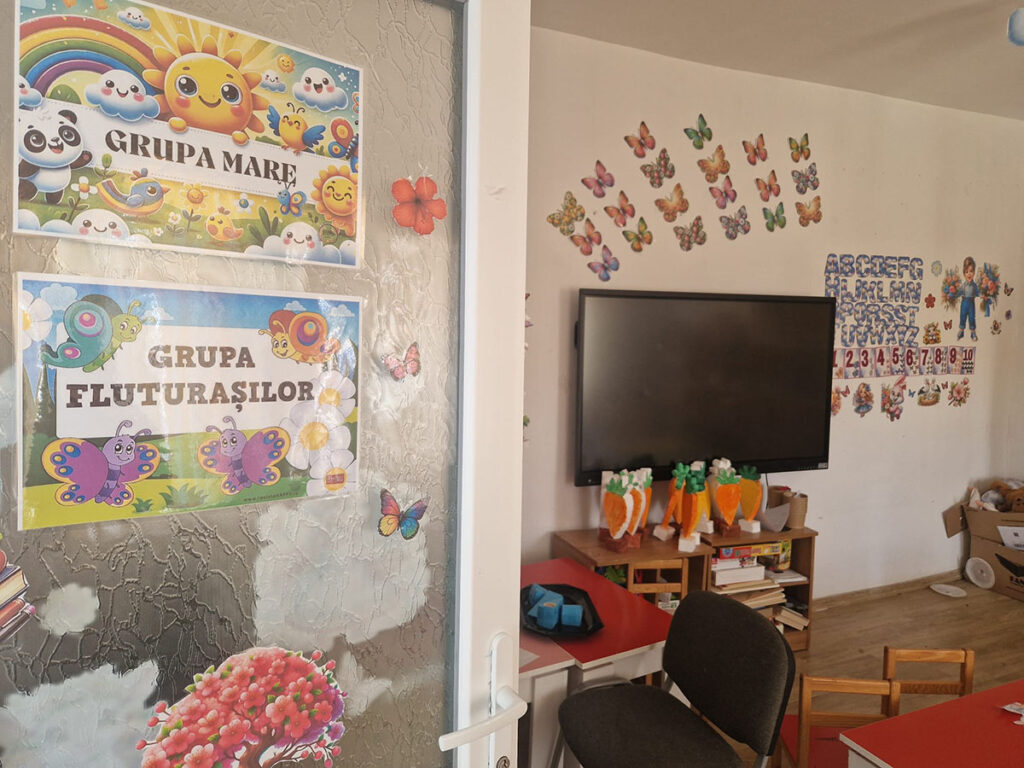
When working with teachers, we strongly encourage them to seek out the most interactive teaching methods possible, as shown by the classroom visits we conduct. People use all the resources they have to be as engaging as possible.
Starting from initial assessments of the children (…), the results are visible at the end of the year, both in terms of progress and in what they perceive (…), how much they feel the teacher „sees me, cares about me.” There’s progress across the board.
The schools in Dobromir are heading in a good direction. Dobromir is a challenging community.
We’ve seen a great commitment from the teaching staff, a real desire. It wasn’t an easy year for the Dobromir teaching staff and the community from many points of view; they went through many changes. Nevertheless, what we saw was that the teachers’ commitment is real, and no matter how challenging it was, how many changes occurred, they remained because they believed, they had that motivation, „let’s do something different for the children.”
They have activities that are similar to what a second chance means. Literacy activities for parents. If we create a playground, for example, it’s designed to remain open, so it’s an opportunity for children from the school and the community to come and play, but also to see that school is okay, even if initially they just come to play.
Whatever you do, if you close it, if you lock it down, it doesn’t help you at all.

Here’s the English translation of your text:
Companies That Converted or Were Established on the Eve of PNRR
– From Boats to Computers
In December 2024, the company Eco Delta Lotca SRL won four contracts from Gârliciu City Hall (Constanța). For approximately 160,000 euros, it was supposed to equip a school and a kindergarten in the Constanța commune with digital equipment, furniture, provide facilities for a sports hall, and set up several school cabinets and laboratories.
The company, based in an apartment in Tulcea, was founded in 2018 by Petre Gabriel Carașca and, for six years, dealt with recreational and entertainment activities. More specifically, it took tourists on boat trips in the Danube Delta.
Over the past two years, the company has had, on average, one employee and a turnover of 34,000 euros in 2024.
Petre Gabriel Carașca, who is currently the company’s administrator, also owns another firm in the same field – Eco Delta Trip – with no employees and a turnover of 1,500 euros in 2024.
By the company’s decision of April 4, 2024 (published in the Official Gazette on May 28, 2024), Eco Delta Lotca added, among other things, the trade of furniture and computers to its secondary activities.
The company registered on the public procurement platform on April 16, and on April 17, it submitted its offer for the tender launched by Gârliciu City Hall, which it won at the end of the year.
Another company, whose offer was rejected, challenged the tender with the National Council for Solving Appeals (CNSC), arguing, among other things, that Eco Delta Lotca has no experience, and the winning sum of 810,000 RON without VAT is „a sum equivalent to the turnover of that company over the last 4 years.”
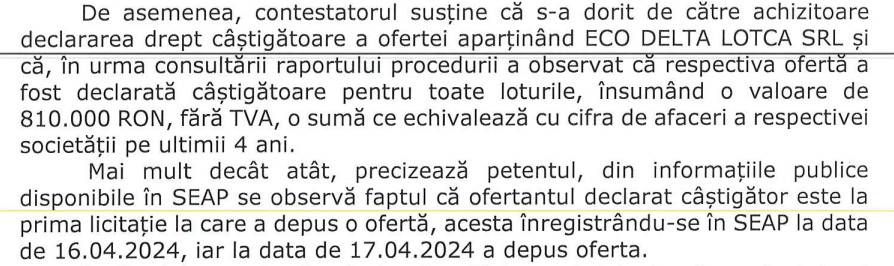
The CNSC (National Council for Solving Appeals) admitted the re-evaluation of the contesting company’s offer but rejected the criticisms leveled against Eco Delta Lotca, stating:
„- the fact that an offerer won several lots or that their financial proposal is equivalent to their turnover is irrelevant in this case;
- it is considered that the date of economic operator’s registration in SEAP (Electronic Public Procurement System) and its experience are not relevant factors influencing the decision to award the contract.”
Eco Delta Lotca subsequently won three more contracts, totaling approximately 240,000 euros, for teaching materials, furniture, and ICT equipment with the city halls of Eforie (Constanța), Măcin (Tulcea), and Botoroaga (Teleorman).
Regarding the contracts in Gârliciu, the company administrator told ISE that the project was completed and all products were delivered:
„They’re finished, everything’s in order, all the products were delivered, everything is concluded there. We just diversified our activity; the boat activity is still ongoing. There are two of us. Myself and one other employee. Basically, it’s intermediation, nothing special, no production involved. It’s an opportunity; the company’s activity has practically diversified. It appeared after the PNRR (National Recovery and Resilience Plan) projects started. New companies could have been established. But we chose to operate under an existing company. We had a few contracts, nothing special, nothing suspicious, so to speak,” Gabriel Carașca, the administrator of Eco Delta Lotca, told Info Sud-Est.
– From Church Music and Construction to Laptops and Benches
In 2023, Gârliciu commune also signed a 2.4 million RON contract for the renovation of the Cultural Center with the companies LCS Ideal Top Construct and Cybersofconstruct.
The company Cybersofconstruct was founded a year earlier in Valu lui Traian by husband and wife Oana-Daniela Dumitru and Ion-Iulian Dumitru, an archdeacon and conductor of the „Armonia” Orthodox Choir. The construction company was established at the same address as the Armonia Male Choral Association.
„We must say that behind us there is a man who supports us in all respects – His Eminence Teodosie, Archbishop of Tomis. He is our father who manages to support this choir,” Dumitru said in an interview for Ziua de Constanța.
While in 2022 the company had a turnover of approximately 25,000 RON, in 2023 and 2024, the turnover exploded: approximately 760,000 RON in 2023 and 5.4 million RON in 2024.
Between 2024 and 2025, CYBERSOFCONSTRUCT won 11 tenders worth approximately 5.4 million RON for the supply of digital equipment and furniture in projects funded through the PNRR.
Additionally, the company won 35 direct procurement contracts, totaling 1.6 million RON, for cybersecurity services, exterior repairs, software products, toner cartridges, musical instruments and sports equipment, IT equipment, teaching materials, furniture, school supplies, or „professional development for teachers” courses.
Oana-Daniela Dumitru also owns another company – D Smart IT SRL, founded in January 2024, at the same address in Valu Lui Traian.
With only one employee in 2024, it achieved a turnover of 3 million RON.
Between 2024 and 2025, the company won 8 tenders totaling 5.6 million RON for the supply of furniture and digital equipment within the PNRR and another 58 direct procurement contracts, worth 4.4 million RON, for the supply of various IT equipment, school supplies, teaching materials, or even air conditioners in schools.

Oana Daniela Dumitru, administrator of Cybersofconstruct and D Smart IT, told ISE that she won all projects through tenders and completed all of them:
„We won the contracts through tenders and saw them all through to completion. Everything we’ve contracted and are currently working on is either closed or has had additional acts made where the 30-day delivery period couldn’t be met. We are also furniture manufacturers, and that helps us a lot.
Being the administrator of two companies, we used employees from Cybersofconstruct. And yes, we have new employees this year at D Smart IT. And yes, IT services are outsourced a lot.
Where we got involved, we successfully completed projects, and we have very good feedback. We’ve started furniture production and we’re very good at it. We’ve also worked for the private sector in parallel.
These IT projects are not difficult to implement. We also did imports, we got very good prices, that’s why we won the tenders, because we offered low financial bids, having the opportunity to access products directly from the manufacturer. We imported from China and Cyprus.
And for assembly, training, and on-site equipment installation, a maximum of 3 people are used, so you don’t need huge teams. With a maximum of 3 people, you can implement an IT PNRR project on the ground. That’s an efficient team; you don’t need 30 employees.”
This call for projects, funded through the PNRR (National Recovery and Resilience Plan), targets 3 types of investments:
1. Digitalization of Learning Environments in Pre-University Education
For this sub-component, the total allocated value is 377,360,200 euros, excluding VAT, eligible value from the PNRR, distributed per investment as follows:
- 5,200 equipped computer labs.
- 3,600 schools with primary, secondary, and high school classes equipped with IT equipment for the digitalization of learning resources.
- 909 computer labs in vocational education and training schools.
2. School Infrastructure
For this sub-component, the total allocated value is 600,000,000 euros, excluding VAT, eligible value from the PNRR, distributed as follows:
- 75,000 classrooms/rooms for extracurricular or sports activities, equipped with furniture.
- 10,000 laboratories/cabinets in the pre-university education system, including psycho-pedagogical assistance cabinets.
3. Equipping Practical Workshops in the Vocational and Technical Education Network, Including Digital Equipmen
For this sub-component, the total allocated value is 90.9 million euros, excluding VAT, eligible value from the PNRR, for:
- 909 VET (Vocational Education and Training) units equipped with functional practical laboratories.
- Material produced within the „DigITup” project run by the Center for Independent Journalism (CJI), with the support of EDGE Institute.
Ne bucurăm că ne citești!
Dacă vrei să ne și susții: