

Israeli forces intercepted all more than 40 boats that were part of the “Global Sumud Flotilla” (GSF), the latest civilian initiative that attempted to challenge the naval blockade Israel imposed on the Gaza Strip in 2007.
The last vessel that had gotten away, the Marinette, was intercepted on Friday, about 42.5 nautical miles from the Gaza Strip, AP News reports. Over 450 people, including European lawmakers and Swedish activist Greta Thunberg, were detained, and nearly half of them have already been deported.
Almost immediately after the first ships were intercepted, a wave of massive protests began in several countries, mainly in Europe, since the majority of passengers were European citizens: Euronews reports demonstrations with thousands of participants in cities in France, Italy, Spain, Portugal, and Switzerland from Wednesday up to the present.
Although Swedish activist Greta Thunberg has become the symbol of the movement, sitting politicians were also on board the boats. For instance, among the Polish passengers was MP Franek Sterczewski.

- “If you’re seeing this video, it means I have been abducted by Israeli occupation forces in international waters during the peaceful humanitarian mission of the Global Sumud Flotilla,” he said Wednesday in a pre-recorded video posted on social media, according to the British daily The Guardian.
The international reaction and the legal controversy
While activists accused Israel of violating international law, the European political class’s response focused more on ensuring the safe repatriation of their citizens and respect for their rights.
For example, Simon Harris, the Irish foreign minister, convened a meeting with senior officials on Thursday morning to discuss the situation, The Guardian notes.

- “Our primary concern remains the safety of those on board, including Irish citizens. Our latest information indicates that the passengers will be transferred to an Israeli port for processing, and Ireland’s embassy on the ground will work with local authorities and provide consular assistance,” the Irish Foreign Ministry said in a statement quoted by the British daily, noting that at least nine Irish citizens were on board some of the ships.
Some high-ranking politicians, however, issued sharp criticism of Israel: Yolanda Díaz, Spain’s deputy prime minister, described the interception of the flotilla as “a crime against international law” and called on Israel to immediately release those it has detained. Writing on Bluesky, she said that “the EU must cut ties with Israel right now.”
Some high-ranking politicians, however, issued harsh criticism of Israel: Yolanda Díaz, Spain’s deputy prime minister, described the interception of the flotilla as “a crime against international law” and called on Israel to immediately release the people it has detained. Writing on Bluesky, she stated that “the EU must cut ties with Israel right now.”
- Note: Díaz’s statements come a month after Spain imposed an arms embargo and a partial ban on imports from Israel in the context of the war in Gaza.
In the face of these accusations, Israel defends its actions as reasonable measures to maintain the naval blockade that has existed around the enclave for approximately 18 years, Associated Press notes – the blockade was imposed in 2007, shortly after Hamas terrorists took power in Gaza, UNICEF notes.
The blockade and its status under international law have remained a subject of debate throughout its existence, and the main issue is how Gaza’s civilian population is affected by it— a concern that has grown considerably in the context of the war that broke out in 2023:
The World Health Organization confirmed for the first time in August 2025 the existence of famine in Gaza, and the main argument activists make against the blockade is that it contributes to the enclave’s crisis situation. The Geneva Convention prohibits “starvation of civilians as a method of warfare,” while the San Remo Manual on International Law Applicable to Armed Conflicts at Sea (1994) stipulates that:
- “A blockade is prohibited if its sole purpose is to starve the civilian population… or if the damage to the civilian population is… excessive in relation to the concrete and direct military advantage anticipated.”
Over the past two decades, the Israeli blockade has been repeatedly tested by activists, but the most controversial incident occurred in 2010, when nine Turkish activists were killed following a violent confrontation with Israeli special forces who boarded the ship Mavi Marmara, a vessel carrying humanitarian aid that tried to break the blockade in a manner similar to that of the GSF activists, likewise intercepted in international waters.
A report by the UN Human Rights Council, published in 2010, concluded that the actions of Israeli forces were disproportionate and that the interception of the ship was an illegal act.
A year later, however, another United Nations inquiry concluded in the so-called “Palmer Report” that although the way Israeli forces intervened was “excessive and unreasonable” and led to “unacceptable” loss of life, such a blockade is nevertheless legal, and the country enforcing it “has the right to visit and search a vessel and to capture it if a breach of the blockade is found,” including in international waters.
Ultimately, however, both reports are more like UN analytical instruments and do not carry the weight of a legal verdict – the most recent development, in 2020, saw the International Criminal Court, the institution that could render a verdict in such a situation, decide that the Mavi Marmara incident was not grave enough to open an investigation, and since then there has been no attempt to bring the case before the Court.
As for the Global Sumud Flotilla vessels, representatives of the office of Spain’s Attorney General said on Thursday, according to The Associated Press, that they will gather information about the interception of the fleet as part of their ongoing efforts to collect evidence of possible human rights violations by Israel, which they intend to present to international courts.
“Symbolic” humanitarian aid
Against the backdrop of this legal dispute, there are also concerns about the humanitarian aid delivered by the flotilla and the activists’ sources of funding – issues that have been raised repeatedly in recent years.
After the interception of the 40 Global Sumud Flotilla vessels, Israel’s Ministry of Foreign Affairs announced that none of them actually contained humanitarian aid, according to The Jerusalem Post.
The announcement was accompanied by a video made by the Israel Police, in which spokesperson Dean Elsdunne shows what he describes as the empty interior of one of the flotilla’s largest ships.
WHERE IS THE AID?? Just another free clout cruise using Hamas oppressed Gazans for their own benefit and distracting from the peace deal on the table.
— Jewish Breaking News (@JBreakingNews) October 2, 2025
– Lieutenant Dean Elsdunne, International Spokesperson, Israel Police pic.twitter.com/nUZM7X1QPX
The spokesperson emphasizes that the complete lack of aid would explain why the flotilla’s organizers rejected offers from Israel and several other countries to hand over the aid and avoid entering a war zone.
In 2015, another Swedish ship that was intercepted while trying to get past the Israeli blockade was carrying only two boxes of humanitarian aid, in addition to the vessel itself, which the activists intended to donate to a fishermen’s organization in Gaza, as The Washington Post reported at the time.
It is important to note that Israeli authorities have characterized this latest attempt to break the blockade as “a humanitarian cover with documented ties to Hamas and the Muslim Brotherhood”- that is the title of a document published in early September by Israel’s Ministry for Diaspora Affairs and Combating Antisemitism, headed by Amichai Chikli, which claims that the GSF and other similar initiatives are part of a transnational network supported by Hamas and the Muslim Brotherhood, an Islamist organization from Egypt whose goal is the establishment of a “caliphate” governed by Sharia law.
It should be noted that Minister Amichai Chikli is to be questioned in the Israeli Parliament after inviting a British far-right extremist to the country, and Chikli also prompted strong reactions when he backed Călin Georgescu, even though the latter publicly praised the most bloodthirsty Romanian antisemites of the Second World War. Read details here.
- Note: The document relies mainly on OSINT data (social media posts, attendance lists for public events, etc.), which Israeli authorities claim indicate links between members of the “ecosystem” that publicly supports the flotilla’s activities and individuals or organizations associated with Hamas.
In this context, most of the international press has treated the Israeli authorities’ claims with caution. In an article published on Saturday, The Associated Press wrote that “Israel has repeatedly criticized the flotilla and accused some members of ties to Hamas, but has provided little evidence. Activists have firmly rejected the allegations.” PBS News reported the same.
At the end of September, Israel’s Foreign Ministry published, on the institution’s Twitter account, two documents that purported to show financial links between some flotilla organizers and the Hamas group. However, representatives of the Global Sumud Flotilla quoted by Euronews denied the accusations, and Euronews journalists wrote that they were unable to independently verify the authenticity of the information, even though the documents presented “appear to be consistent with the language and look of Hamas’s official communiqués.”
After 18 years, 4 out of 10 Palestinians in Gaza still support the Hamas terrorists
The links between Global Sumud Flotilla activists and Hamas terrorists remain a controversial topic, but a much bigger question for ending the conflict is what will actually happen to the Hamas terrorist group, which has held total control in the enclave for nearly 20 years.
The latest peace plan put forward by the White House, which Israeli authorities and the most important leaders of the Arab world have already accepted, calls for the disarmament and removal from power of Hamas terrorists before reconstruction of the Gaza Strip begins. The problem, in this regard, is that Hamas still enjoys a high level of support among the enclave’s population.
The last time people in Gaza were able to express their vote on this was in the 2006 elections, in which Hamas came in first under the name “Change and Reform” – Hamas won 74 of the 132 seats in the Palestinian Legislative Council, nearly twice as many as Fatah, the runner-up.
The international community refused to cooperate with a Hamas-dominated government as long as the terrorist group refused to recognize Israel and end the violence, but this did not matter in Gaza, where Hamas seized power by force in 2007, before forming an internationally recognized government, though backed by much of the population. Since then, Fatah has been the dominant political force in the West Bank, while Hamas controls Gaza.
There have been no elections in Gaza since 2006, but some independent polls have measured, over time, the political leanings of Palestinians in Gaza – the most internationally cited are the surveys conducted by the NGO Palestinian Center for Policy and Survey Research (PCPSR), which showed in May 2025 that overall support for Hamas is 29% in the West Bank and 37% in the Gaza Strip – thus Hamas remains the main political option for Palestinians in both territories, with the remaining percentages divided among Fatah, other tiny parties, and the undecided.
Among Palestinians who said they would vote in elections, support for Hamas is even higher: of Gazans who said they would vote in parliamentary elections if they were held now, with the same political groups as in 2006, 49% would still vote for Hamas, according to PCPSR data.
The PCPSR data also show some positive trends, but progress is still slow, despite the anti-Hamas protests reported by the international press in recent months: beyond party affiliation, 41% of Palestinians still see “armed resistance” as the best way to establish an independent Palestinian state, and 57% still oppose the two-state solution supported by most of the international community.
For the moment, the Israeli side also doesn’t seem to trust this idea: fewer than 30% of Israelis believe that an independent Palestinian state could “coexist in peace” with Israel, according to a recent poll cited by The Conversation.
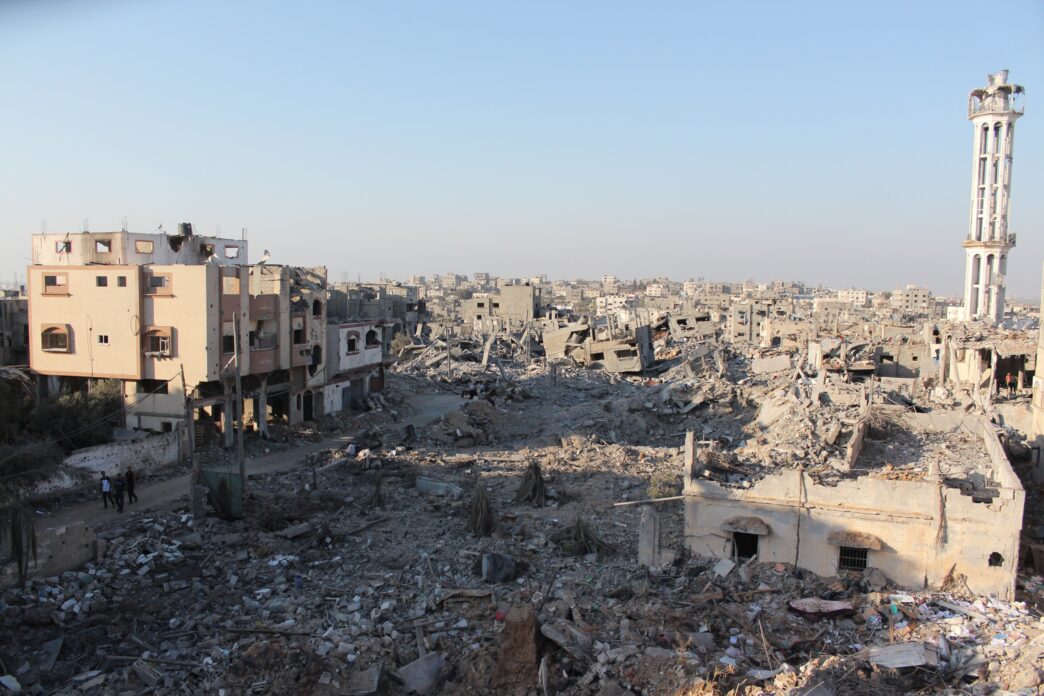
Meanwhile, the death toll in the enclave continues to rise, although the figures are difficult to verify – especially because the flow of information from the ground is controlled by institutions run by Hamas terrorists.
Even so, in January 2025 an independent study published in The Lancet, one of Britain’s oldest and most prestigious medical journals, estimated that approximately 64,000 people died “from traumatic injuries” in Gaza from October 2023 to June 2024.
Women, children, and older adults (aged 65 or over) accounted for 16,699 (59.1%) of the 28,257 deaths for which age and sex data were available, according to the study’s authors.
This study, however, also relied mainly on data from Gaza’s Health Ministry, an institution controlled by the Hamas group.
Israel has already begun the deportation process for the activists detained in recent days, and they will most likely return home safely and begin preparing the next trip to Gaza, as happened in June. But the amounts of humanitarian aid they can transport will not be able to change the situation of civilians in Gaza, even in the absence of the Israeli blockade.
The central problem of the conflict remains that, while more and more international actors support the two-state solution from hundreds or even thousands of kilometers away, the people truly and directly affected by the conflict, both Israelis and Palestinians, do not seem to foresee living together in peace. At least not in the near future.
Ne bucurăm că ne citești!
Dacă vrei să ne și susții: